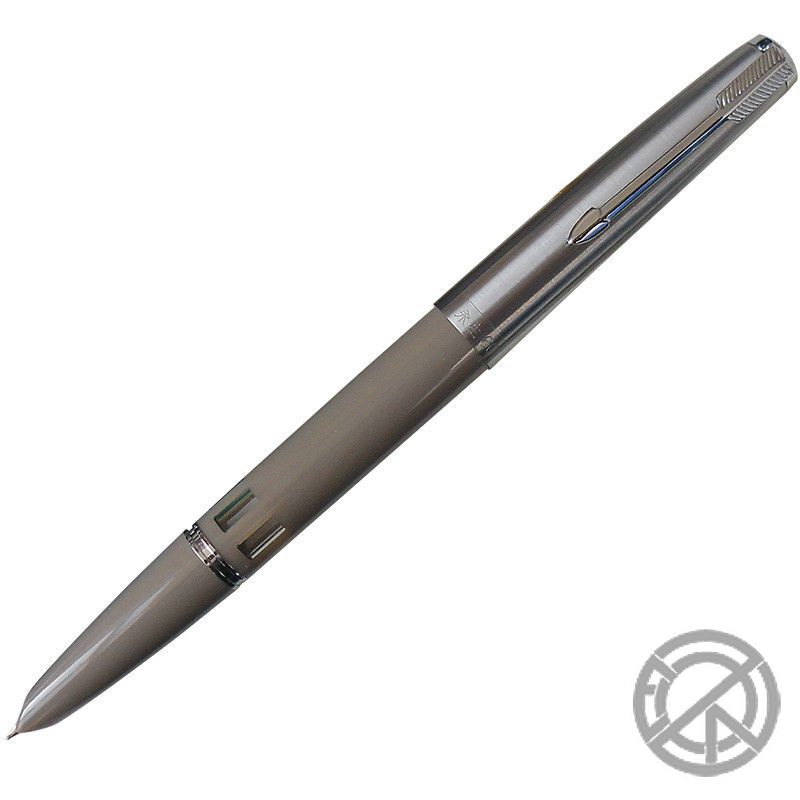
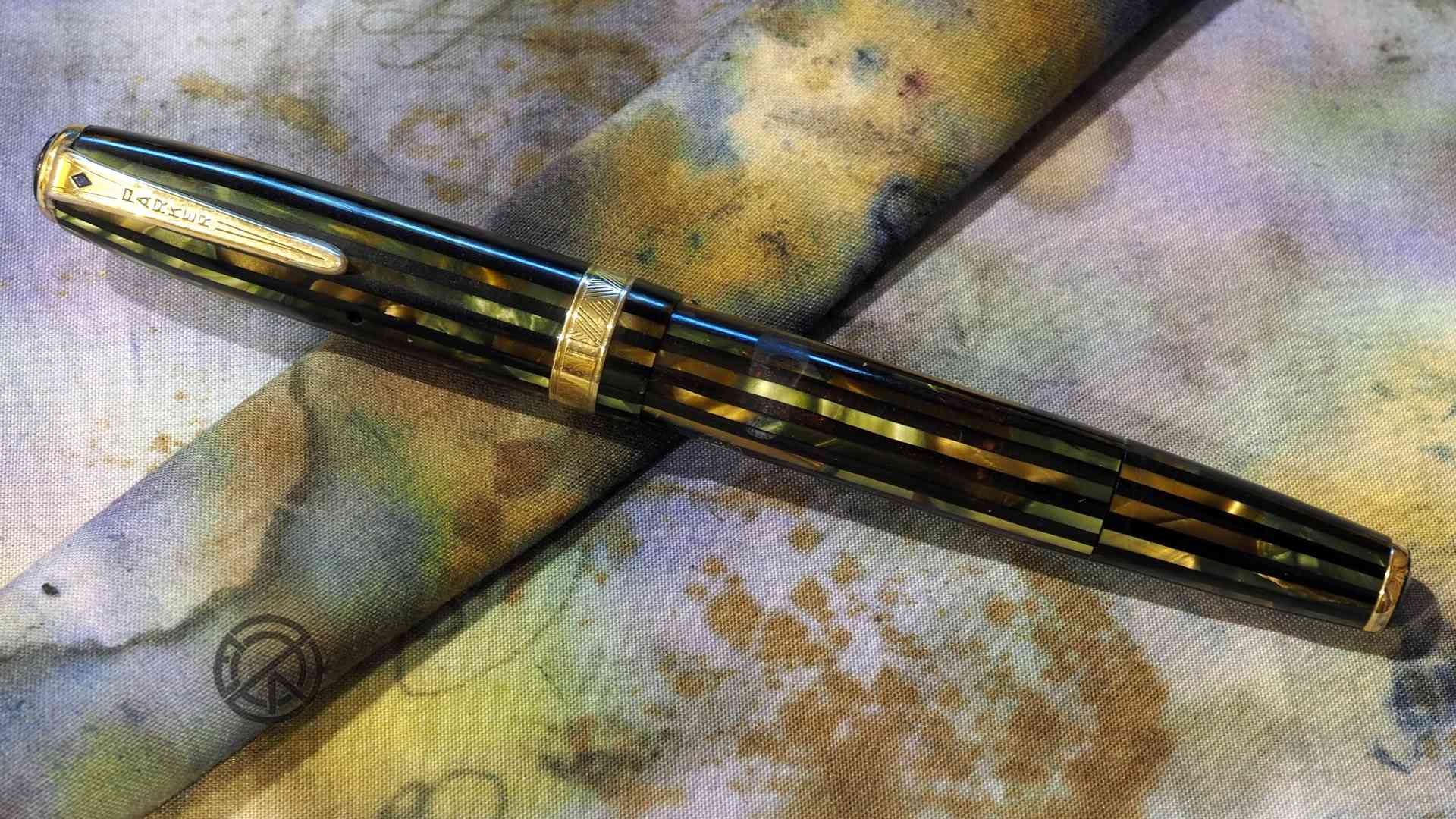
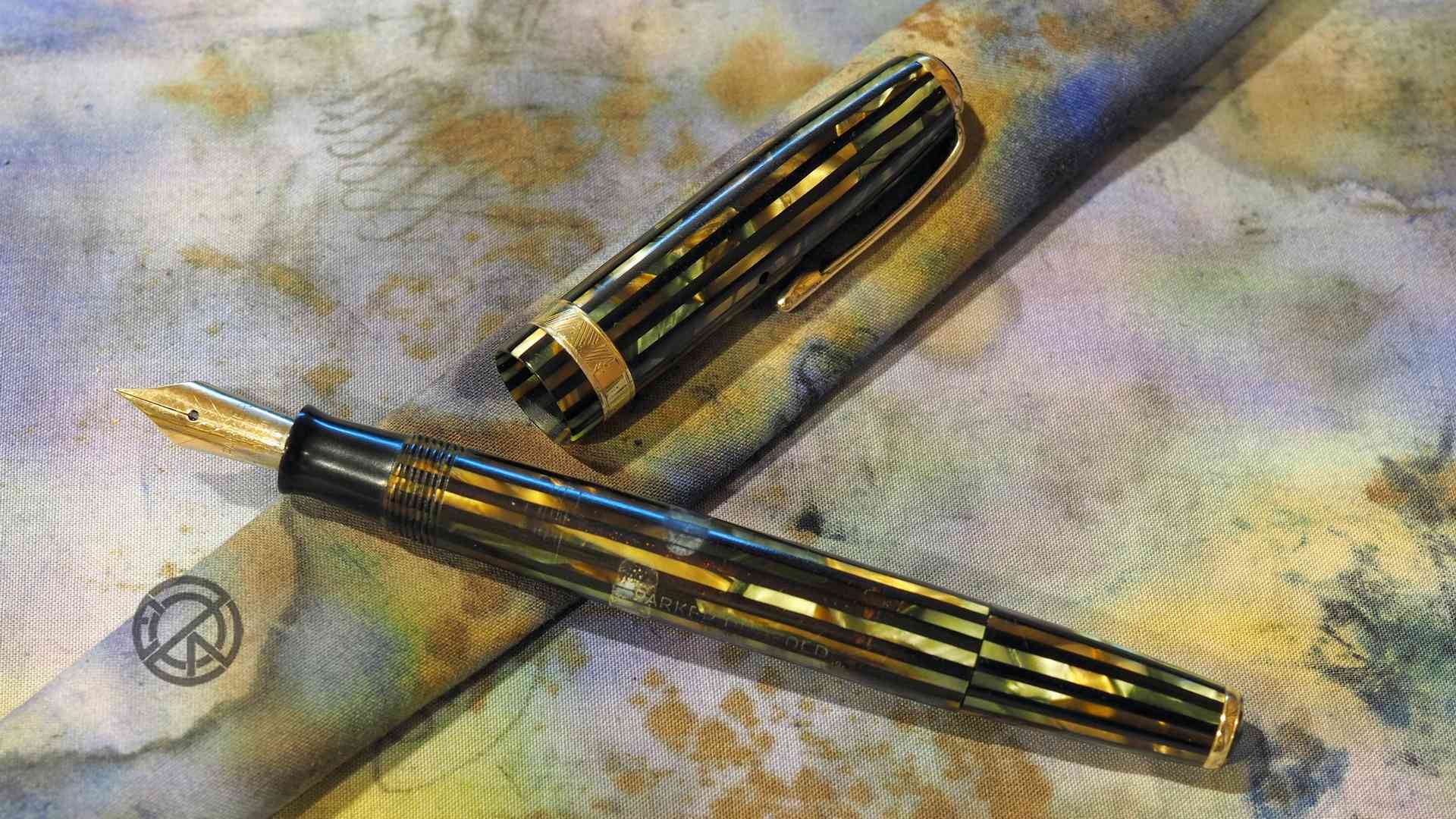
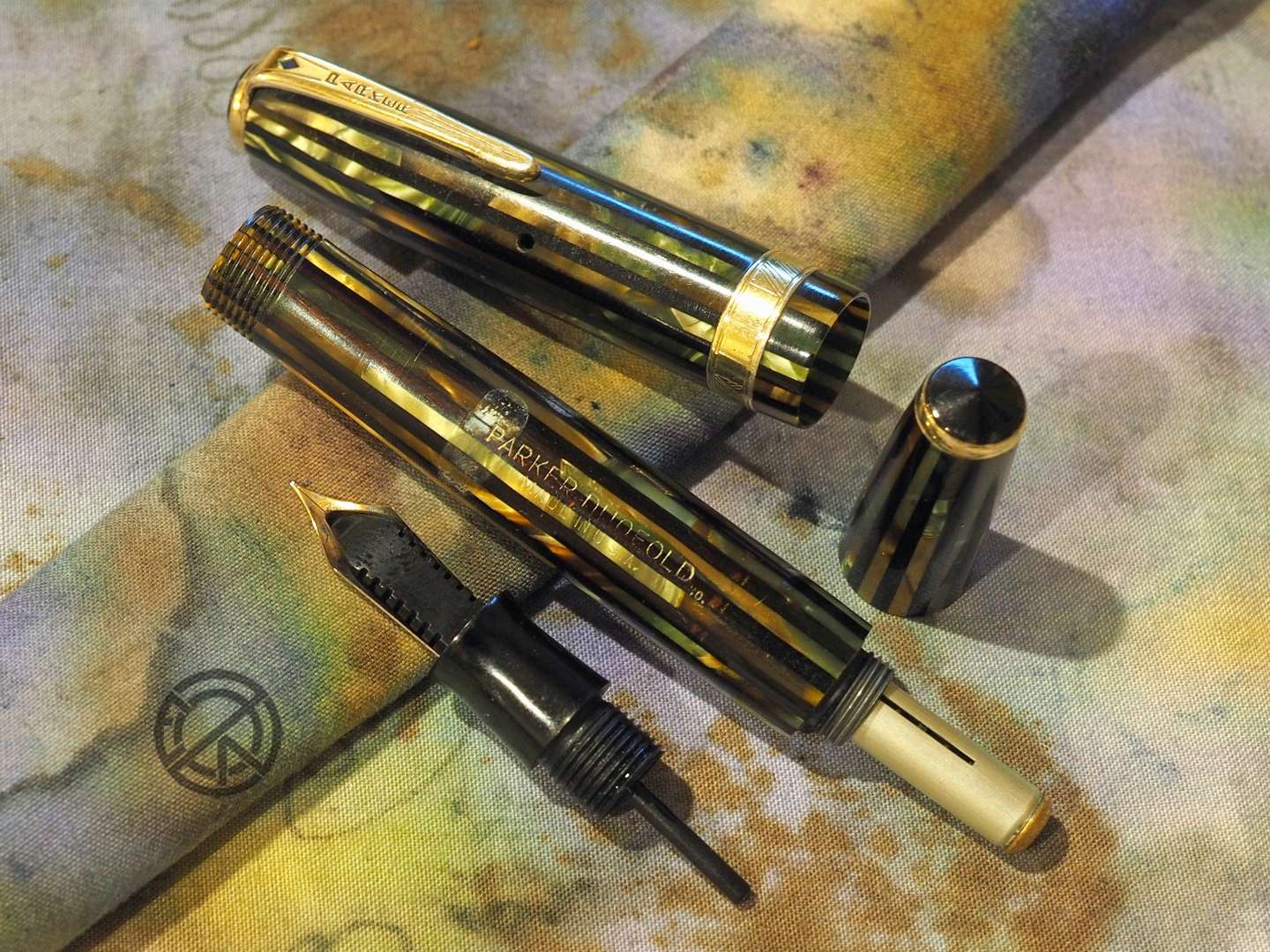
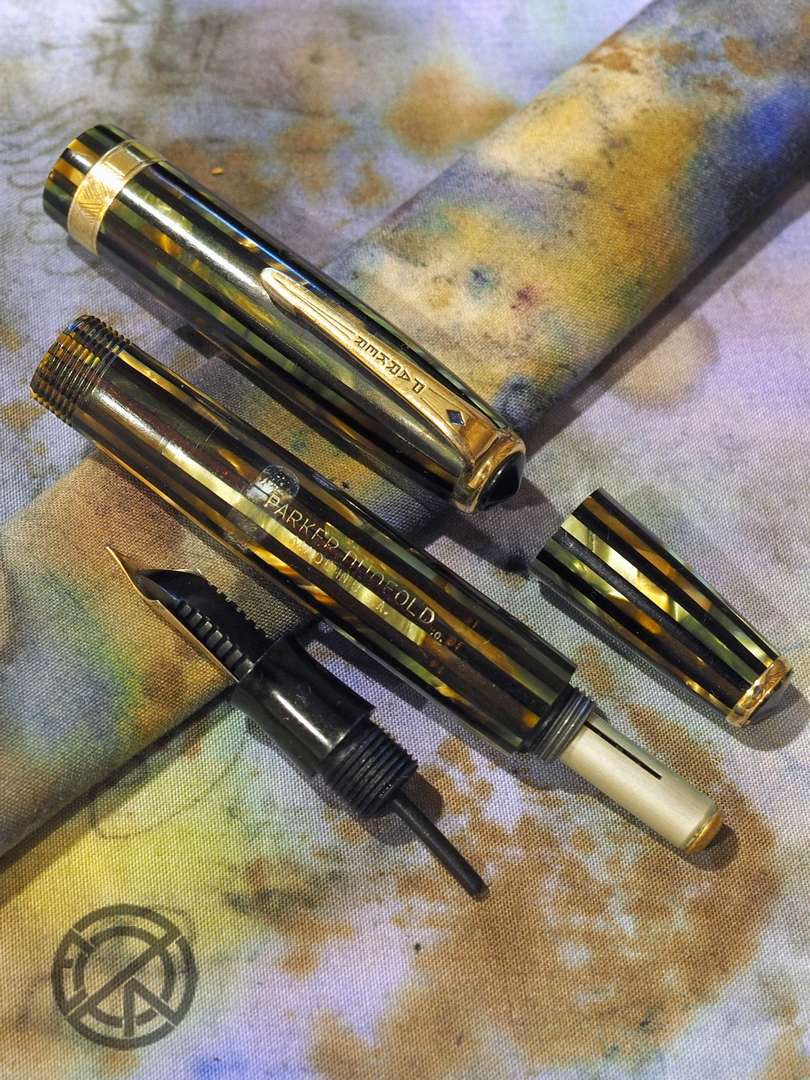
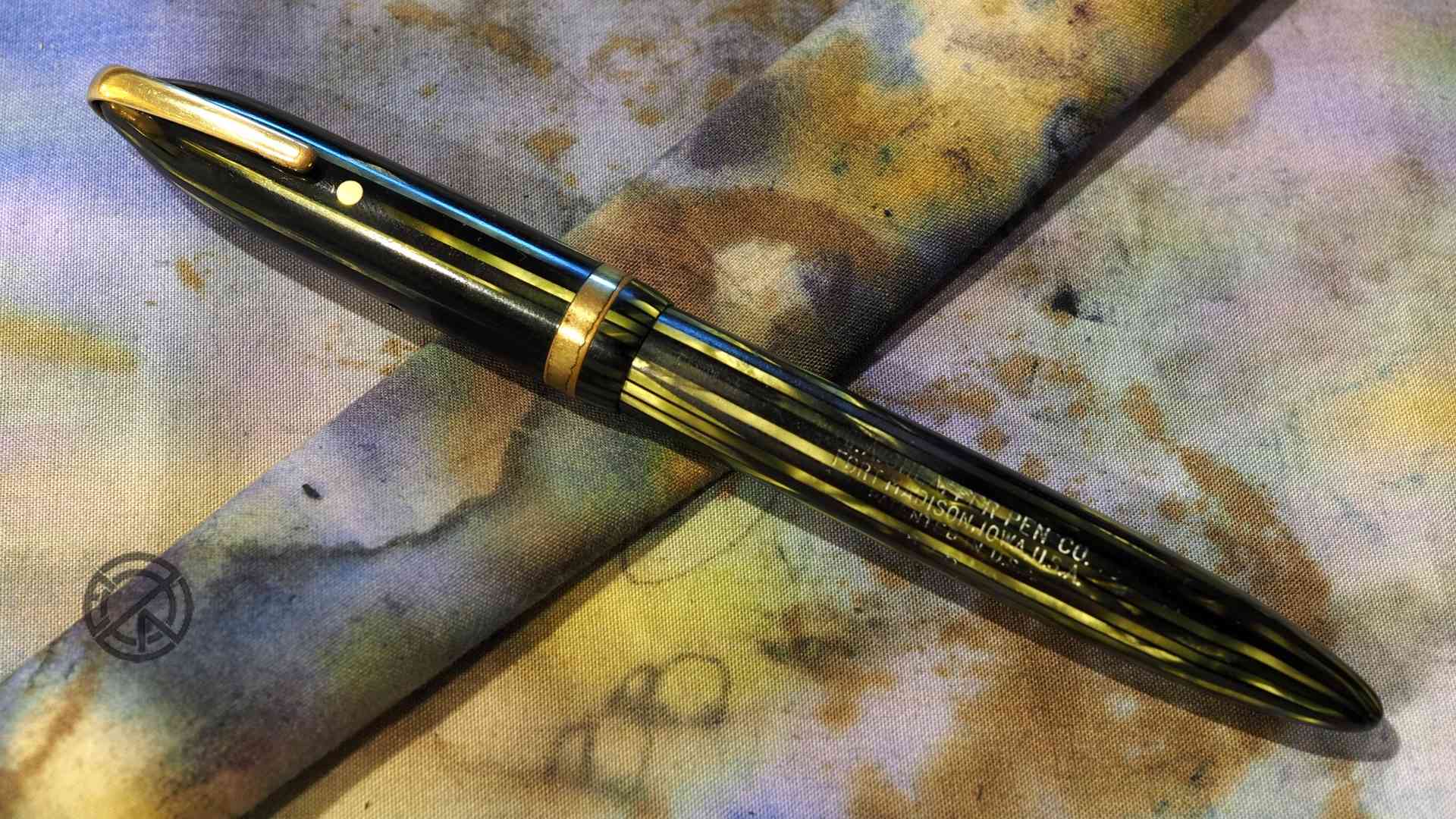
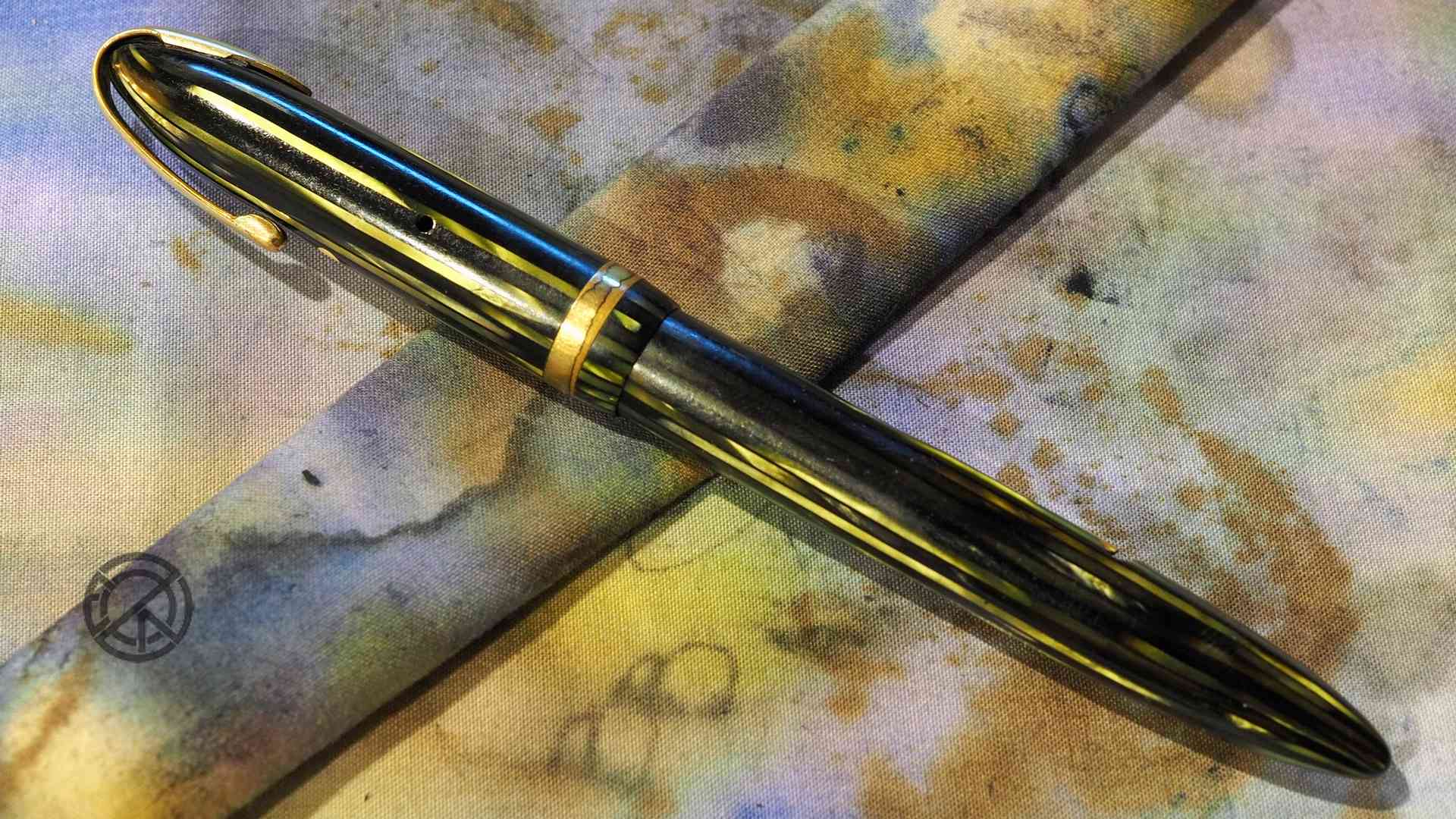
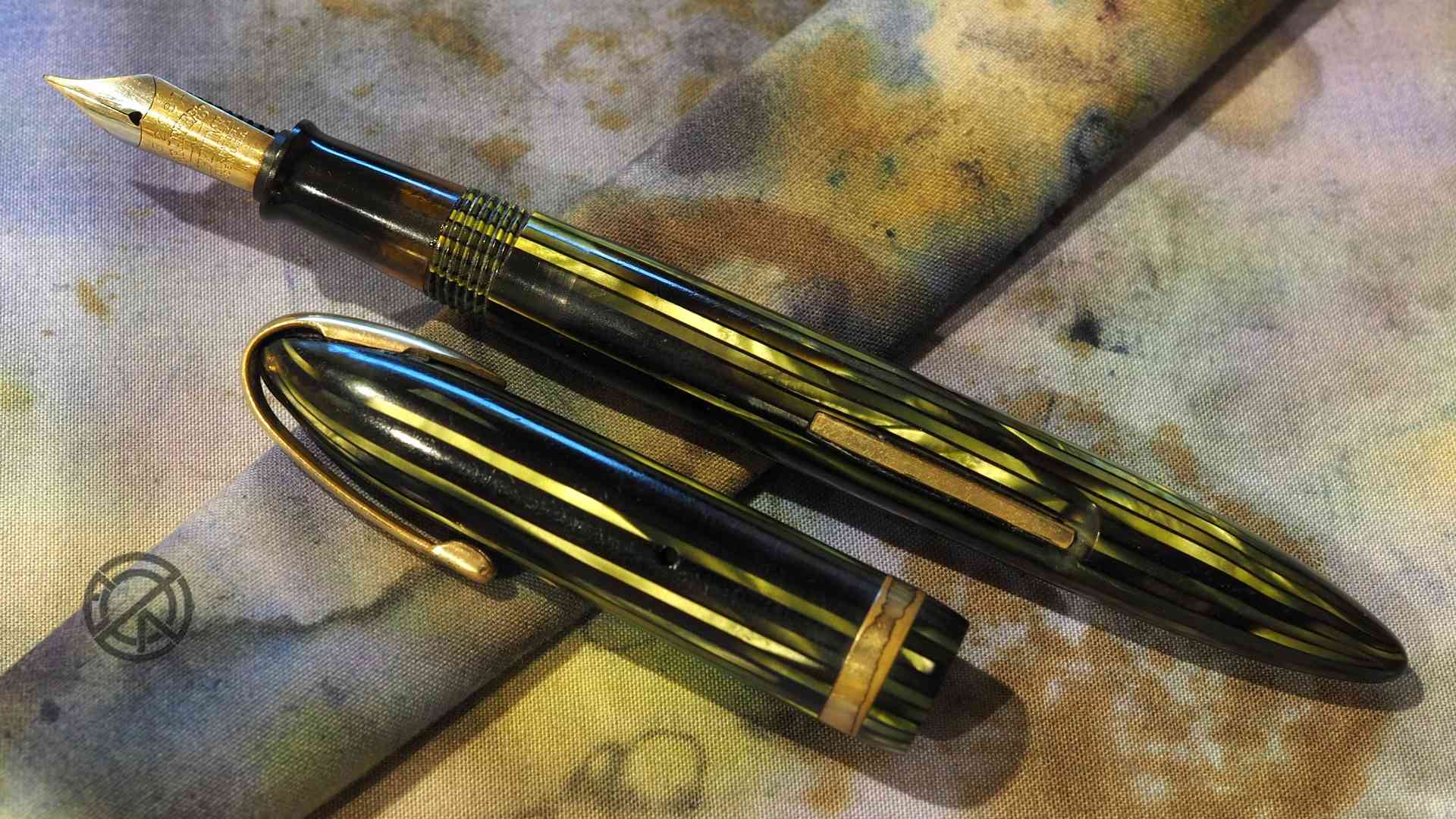
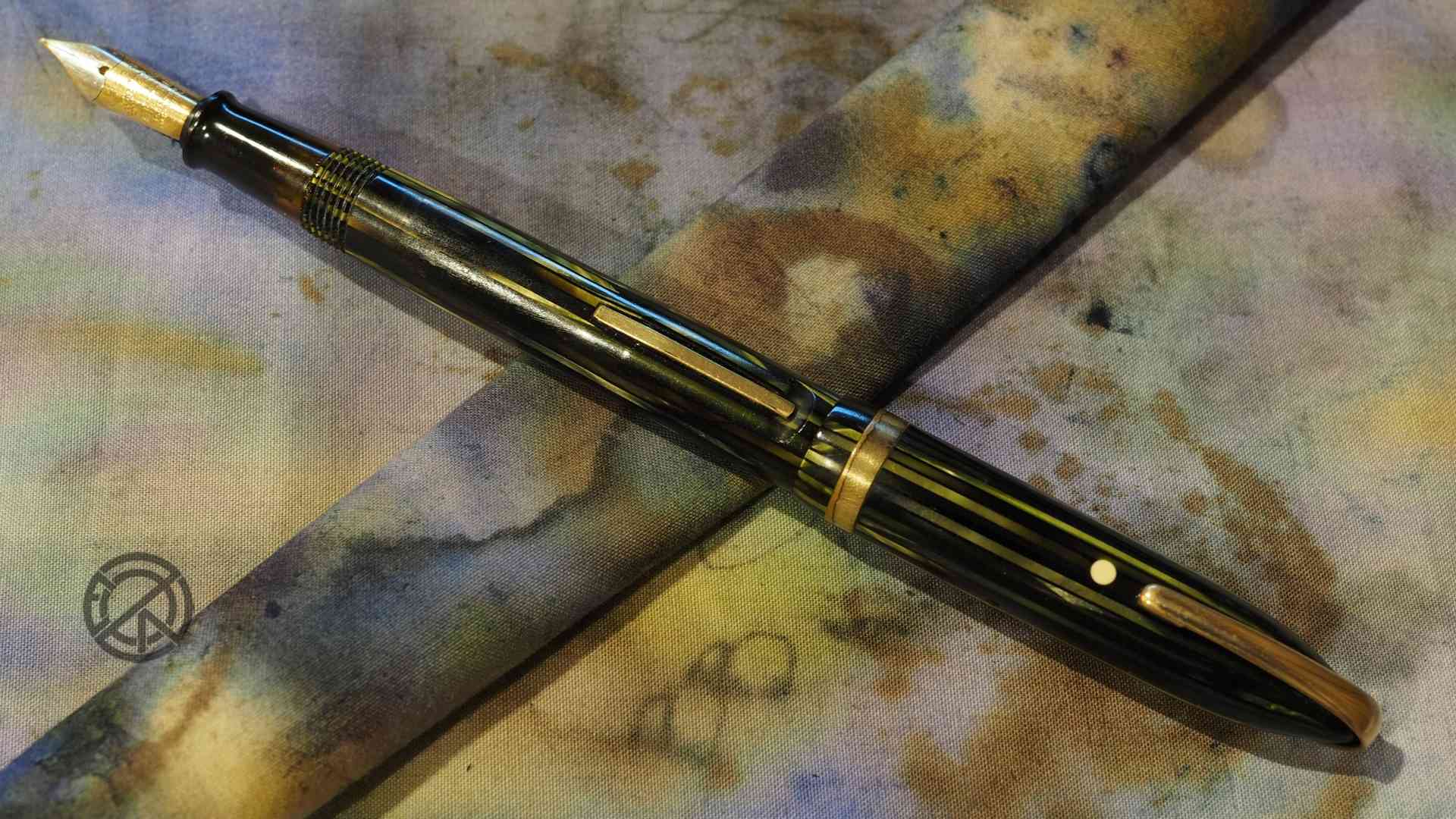
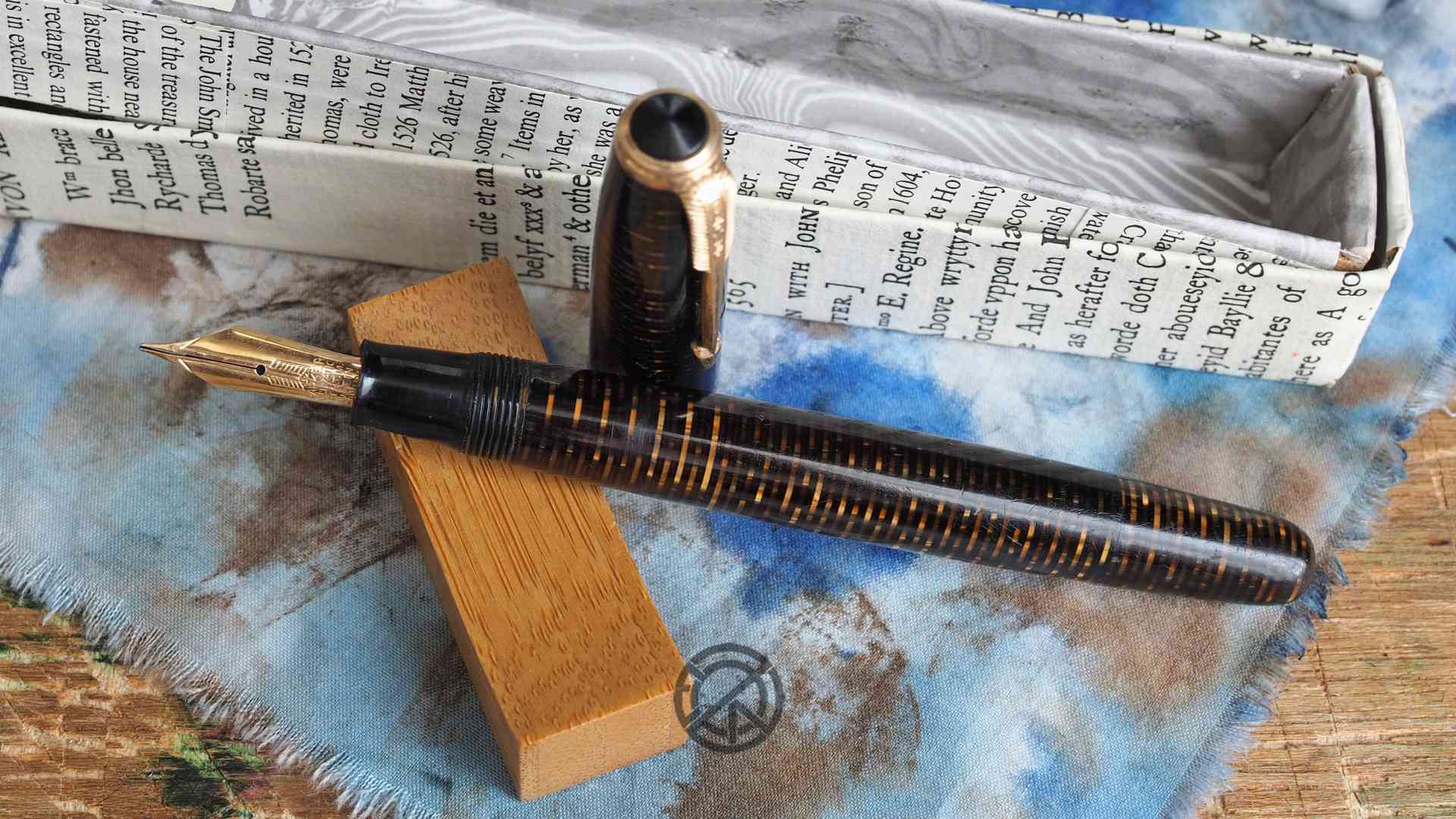
Wing Sung #601 c2018

2018 New Old Design, a retrospective new fountain pen. The Hero/Wing Sung #601 reviewed, described & admired

ongoing FYI interest. The black body #601s have become NLA, also the wholesale price on remaining colour choices has doubled. I was sort of expecting this as there didn't seem to be a lot of these when I first ran across them and so I only bought black ones, one of which is now -mine- =) At this point I have to decide if I should raise their price. If stock becomes available again, I will adjust that too. I watched a similar exciting pen go through the same motions in 2015. Limited production, limited numbers ever offered. And Collectors found this one as well, hence the immediate demand.
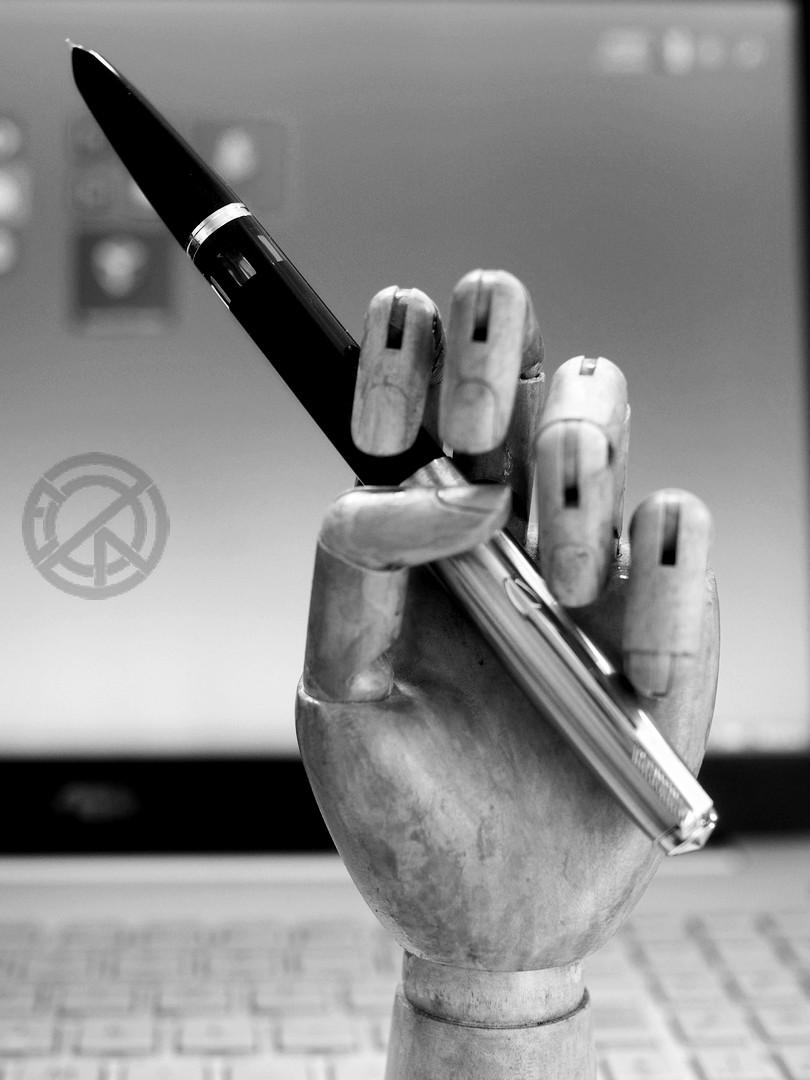
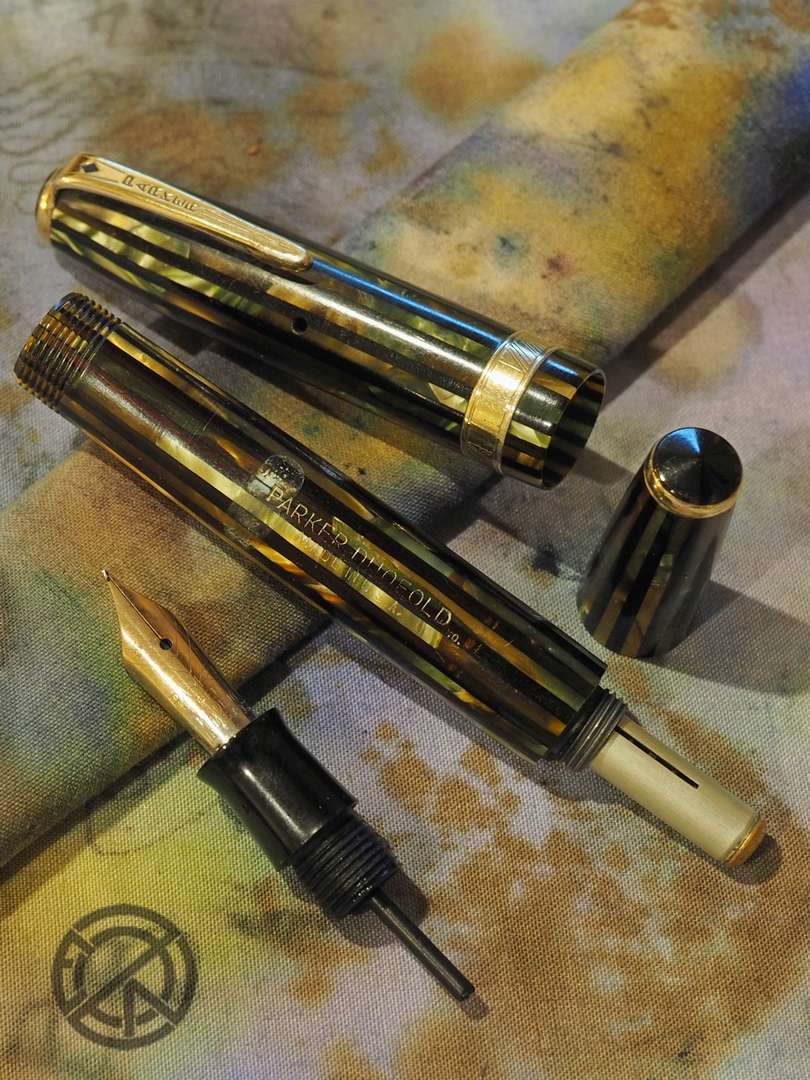
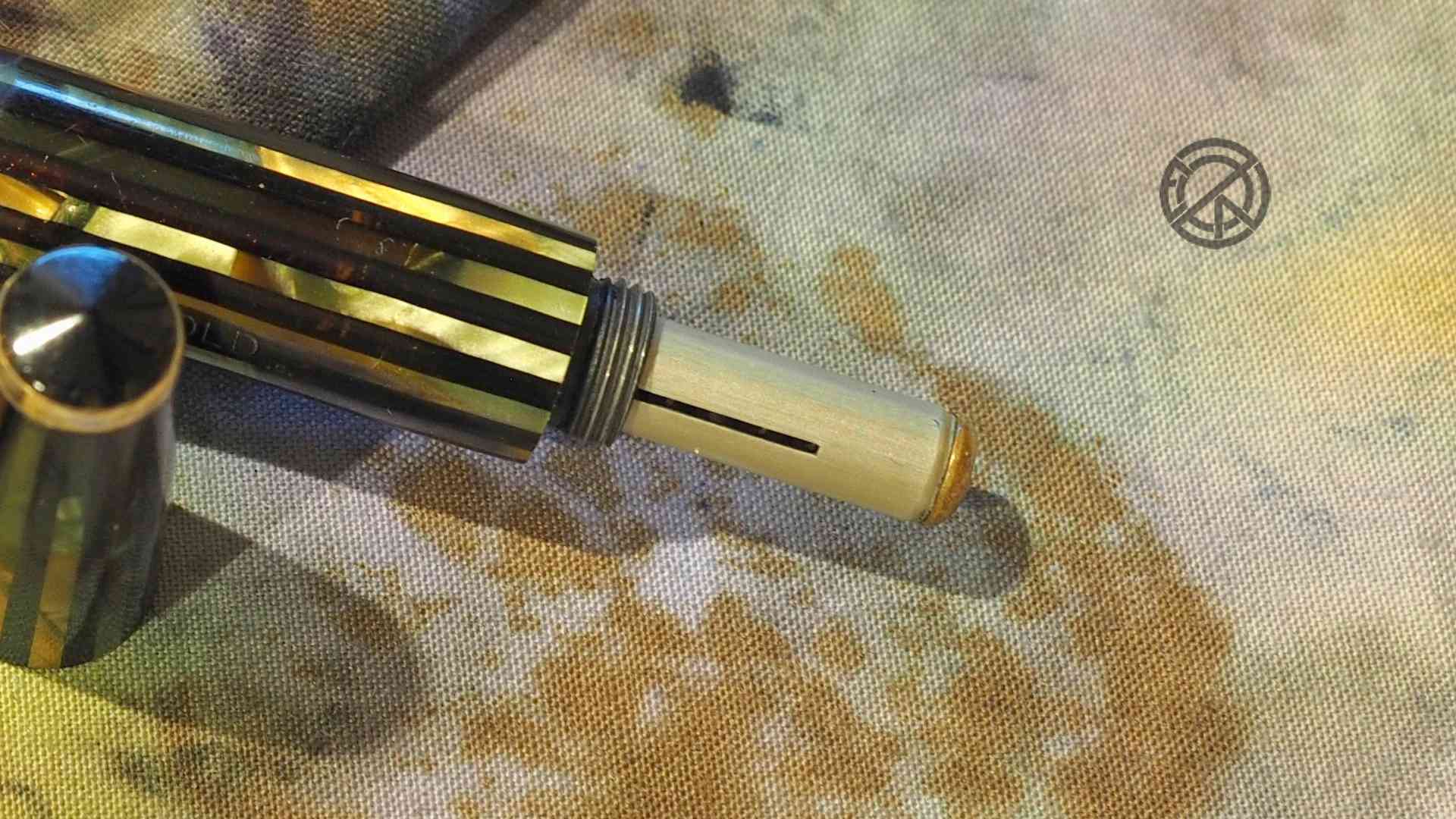
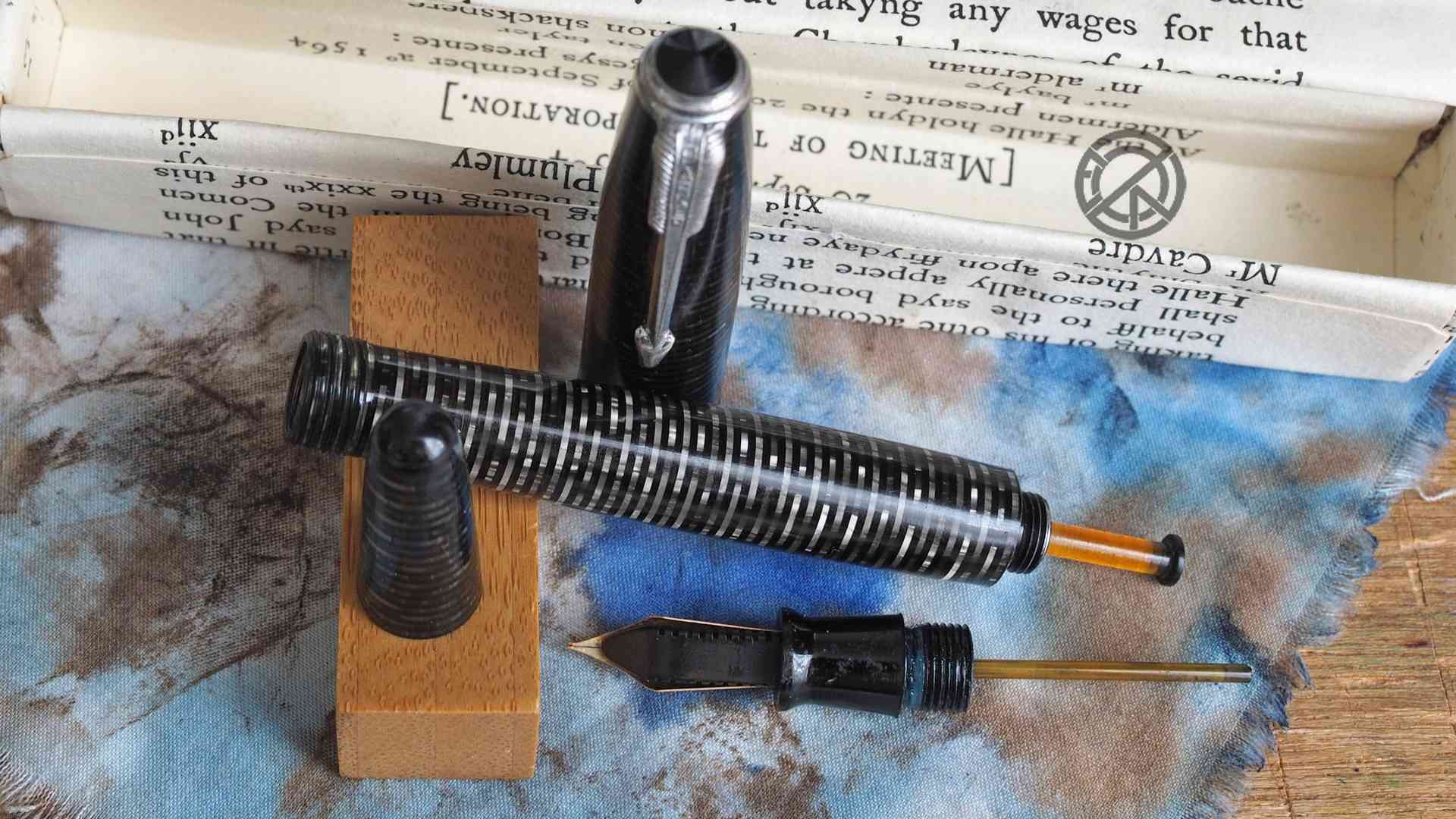
In the 1930s and 40s Parker Pens used an internal filling system called the Vacumatic. The blind body cap of the pen was threaded to expose under that hidden cap, a pump plunger. This pump was attached to a diaphragm bladder that was fixed at the back and when you depress the plunger, it would distend the bladder down into the body core, diminishing the volume; on the upstroke release, that volume would be restored. This causes a simple vacuum which would be the method to fill the pen's ink reservoir. The pen also has a breather tube connected to the feed, which aids the ink flowing into the pen and staying there as the pen is pumped. Instructions from Parker said to pump and release quickly, 10 times, waiting 1 second between each. The vacuum would pull ink through the breather tube and spill into the reserve. leaving the remaining air at the top/back of the pen. Repeating this would eventually remove most of the air and replace it with ink, [to the length end of the tube.] A Vacumatic pen bubbles as you fill it, this will cease once it's full. Years later, Parker replaced the pump with a less complex mechanic. A bladder attached in the other direction was squeezed, the breathing tube remained and the internal mechanics of the fill remained the same.
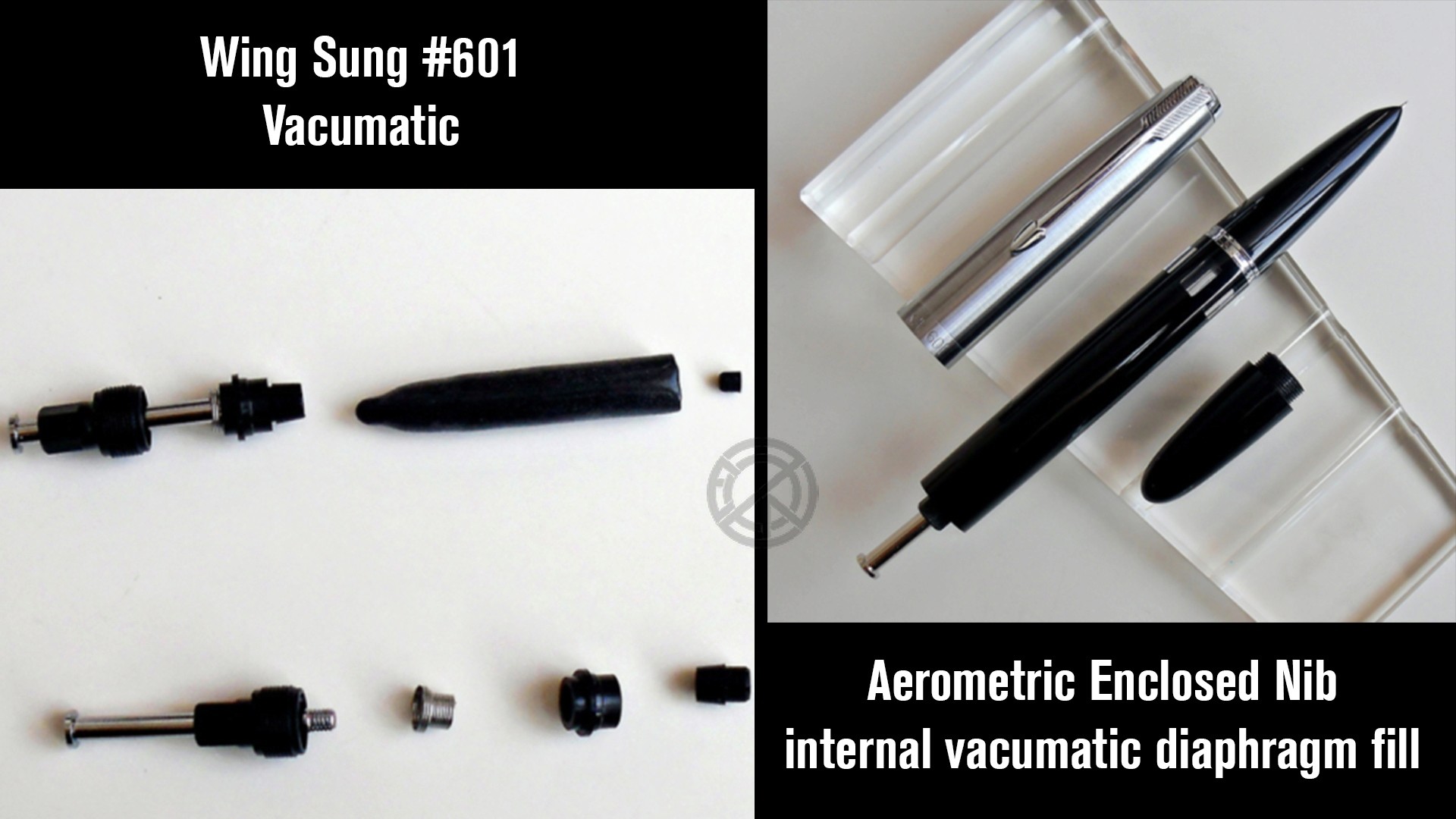


Early Parker 51s had a Vacumatic fill. This was replaced around the 50s. Vacumatics were complex by design and while the last a long time, almost all pens of that age require rebuilding as time and abuse can deteriorate the system. The replacement squeeze bulb fillers are quite long lifed. It's rare, unless a pen has been abused, say ink drying in the pen, for the latter system to need nothing more than cleaning, even after 70 years.

High end pen brands at the time worked on designs that were unique. These allowed them proprietary manufacture. Truthfully, these complex systems weren't the best designs. Schaeffer's snorkel pens over time the plastic of the pens loses tolerance and won't draw ink any longer. MontBlanc's internal pump had cork gaskets that dissolve with age. Parker's Vac bladder, would dry out and degrade. Simple and cheaper pens, had mostly foolproof systems. An eyedropper fill, or a button fill bladder pen, can be 100 years old and work as planned. Rubber over time dries and cracks, but there is little else to go astray.

Until 2018, if you wanted a Vacumatic pen, you had to search and find a restored Parker. As a collector, this didn't bother me. I learned how to repair and fix Vacs early on. The were fun to restore. But they are not easy, and you can mess them up, unless you know the lore and method behind their design. Lots of small parts. Redesigned in WWII to use non metal bits to help with the war effort, it's a labour of love to restore a vintage Parker. But the success rate is high and matched with their beautiful gold nibs, you have a great pen when you get done. Something that you will treasure.

Jump the present day and the Shanghai Pen Factory aka HERO, which has long kept the concepts of PARKER alive in modern design. Parker as a modern Fountain Pen maker no longer makes pens that are proprietary. They use modern ideas such as ink cartridges, ink converters. Their pens are like so many designs of the last few decades. HERO in China, either made PARKER regionally, or they bought up the old Parker tooling. Because for years they have offered their own multi model lines of AEROMETRIC designed fountain Pens. The PARKER 51 was the original Aerometric Fountain Pen. It was unique at it's introduction in the 40's All the new complexity was in the front end of the pen. We covered how the back was first a VAC and later a squeeze bulb fill. The unique change of the 51 was the nib and feed and section. Redesigned completely to compete with the growing ballpoint pen market.
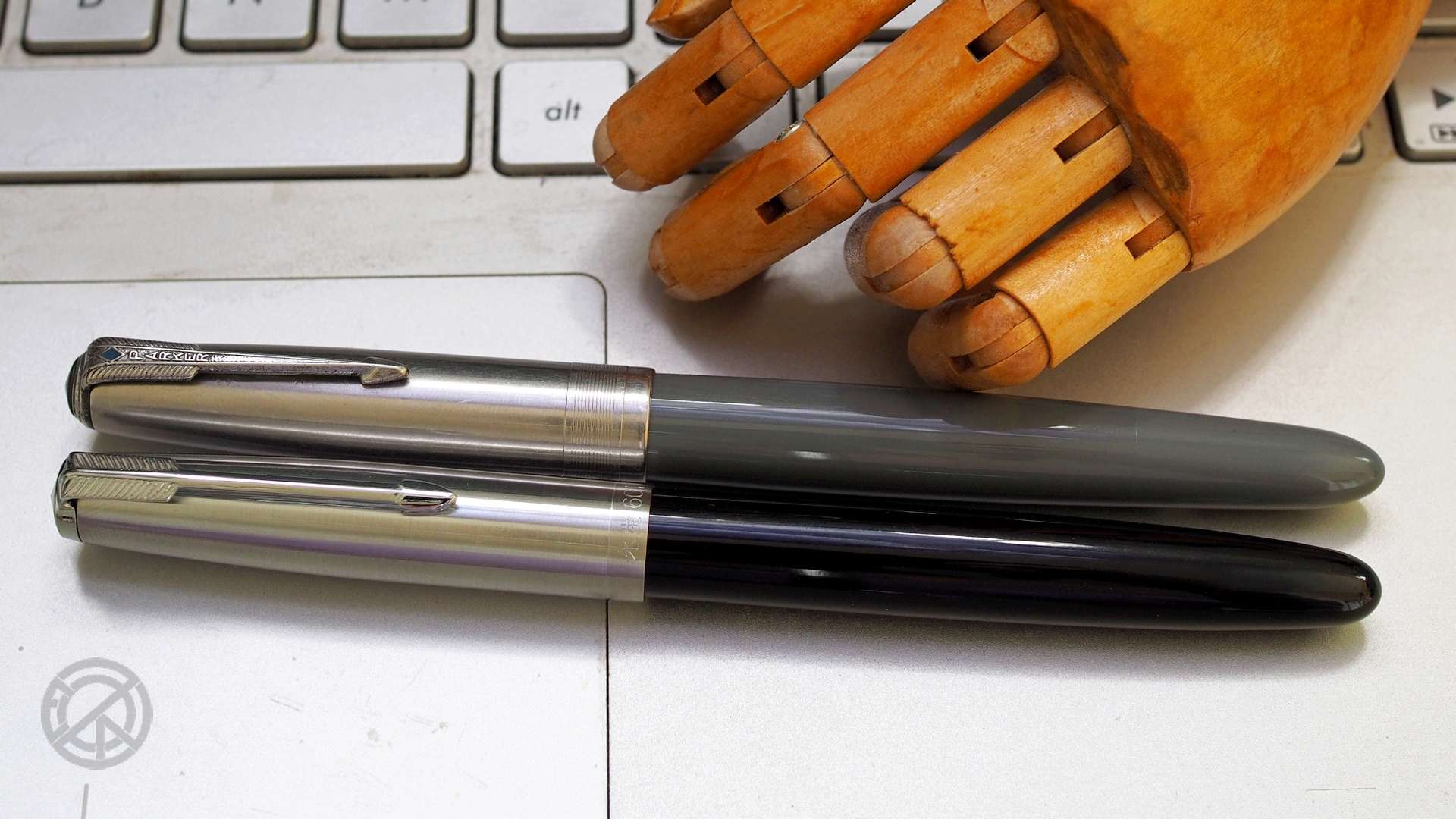


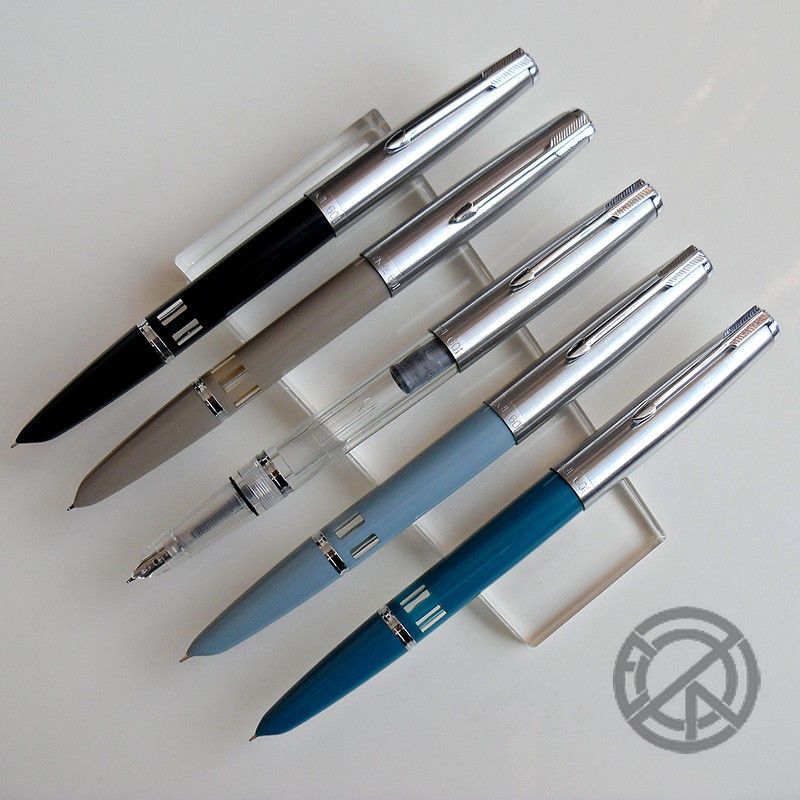
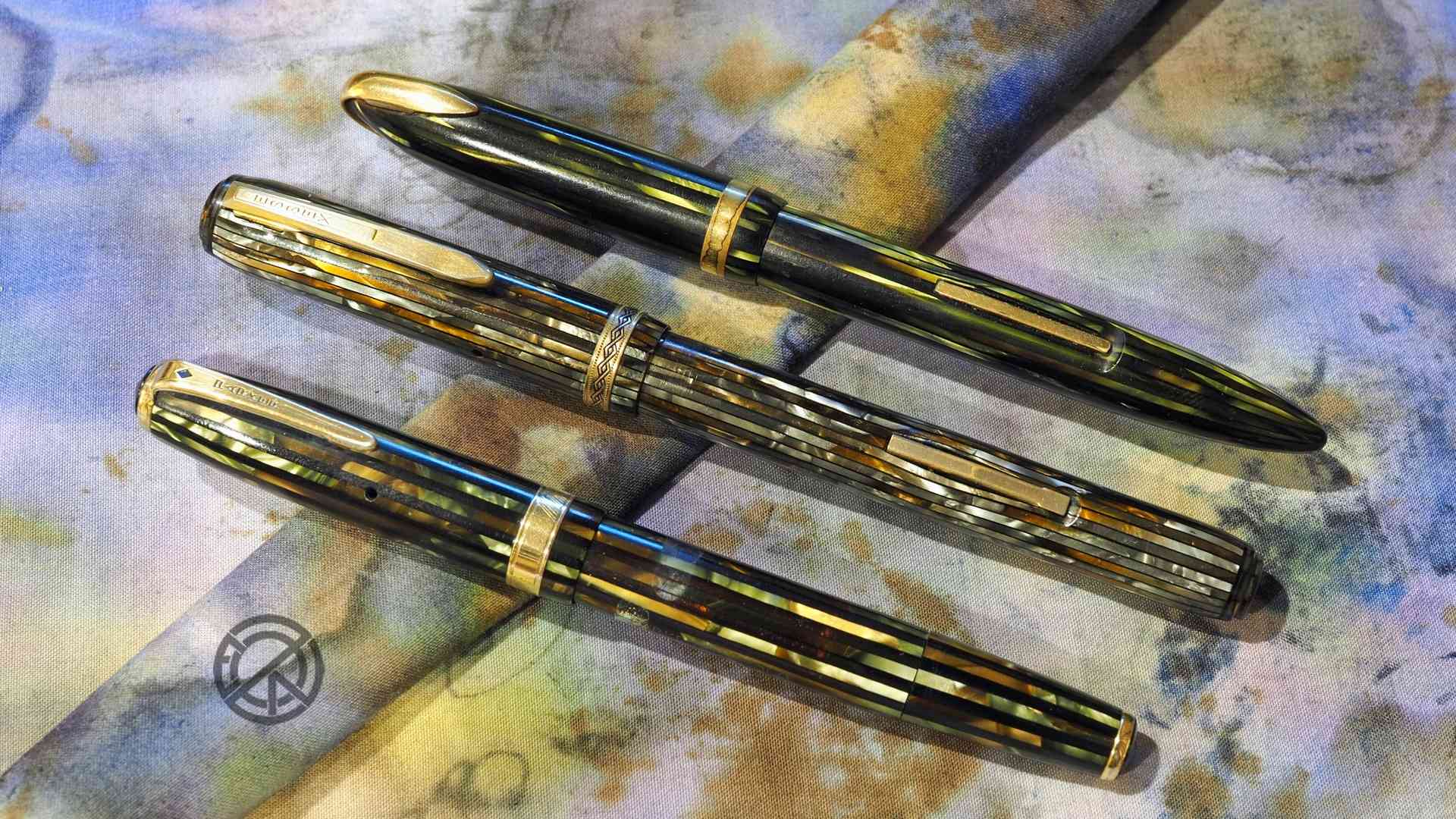
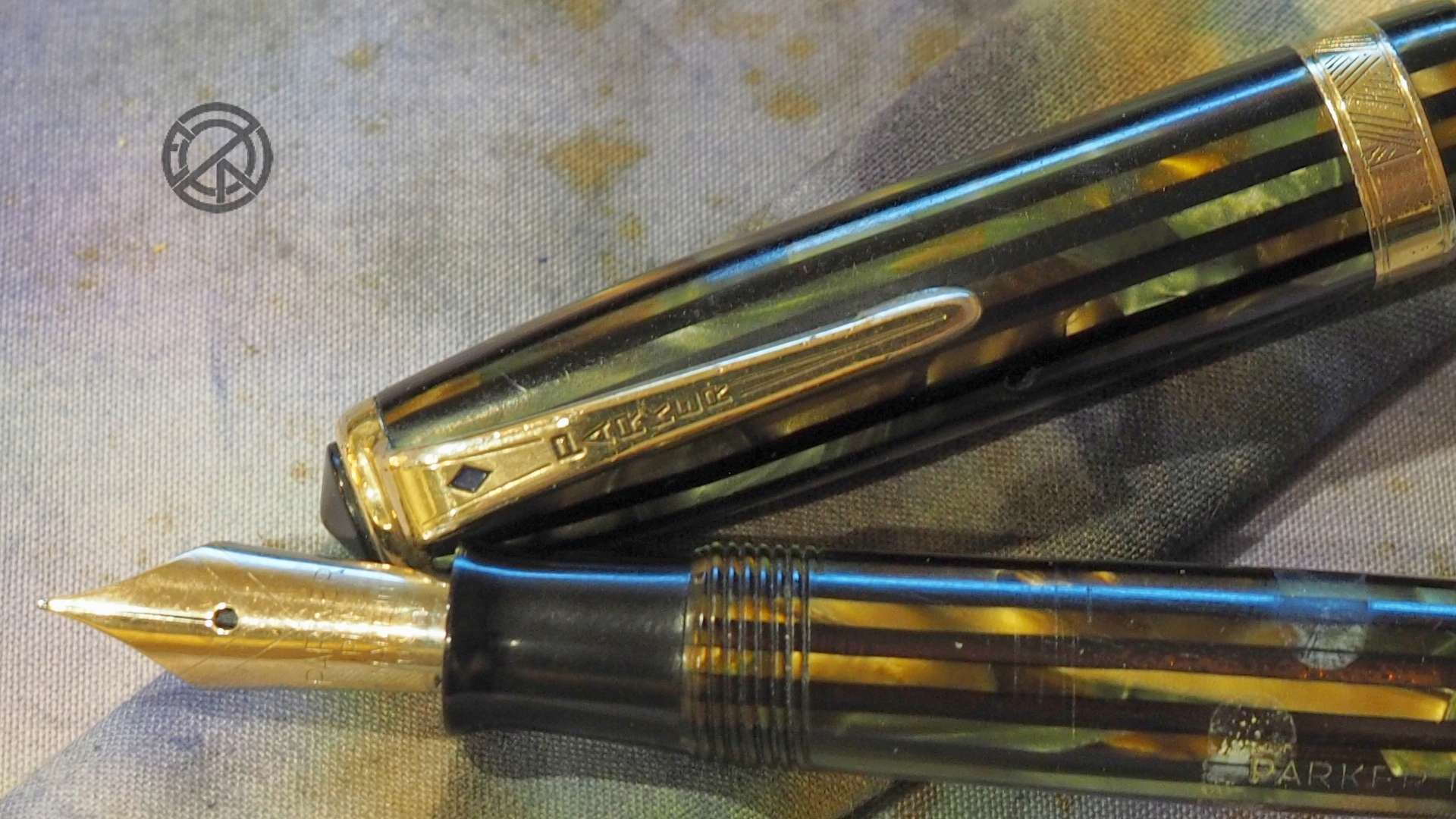
Parker 51 c1940s - top - Wing Sung 601 c2018 - bottom

Aerometric was a covered nib, only the very tip was exposed, the section covering the rest of the nib and feed. This wasn't just cosmetic, the section hid a new internal design. The nib was tubular, the feed inside that with the now ubiquitous breather tube. Both tubular nib and feed were much smaller than most older, exposed nib/feed designs. This new system was surrounded by a new part. The collar. Filling most of the covered section, hollow in it's centre, is a finned collar. What this did inside the covered section was keep that nib and feed immersed in ink. Filled in the capillary spaces of the fins, retained inside the section of the pen. Behind this was the body and the main ink reserve. What this did effectively was keep the nib wet, even when stored upright. Gravity drains ink back into the body reserve on all liquid ink pens. But the Aerometric, by design, made that happen over months vs days. Your pen did not dry out. One of the selling features of newer Ballpoints. The tubular nib and ink flow was created to mimic a non flexing, consistent line width, again in competition with the ballpoints. Parker 51s and their latter ilk became desirable for their accurate and clean features.

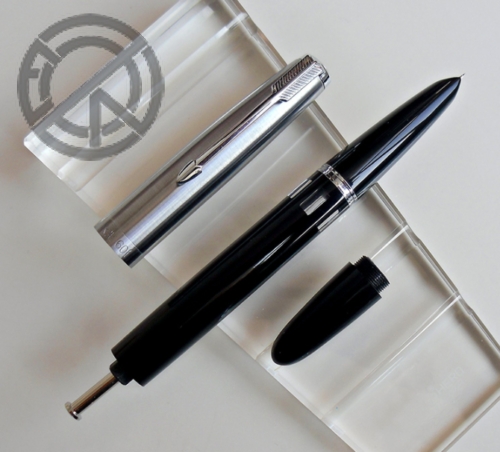
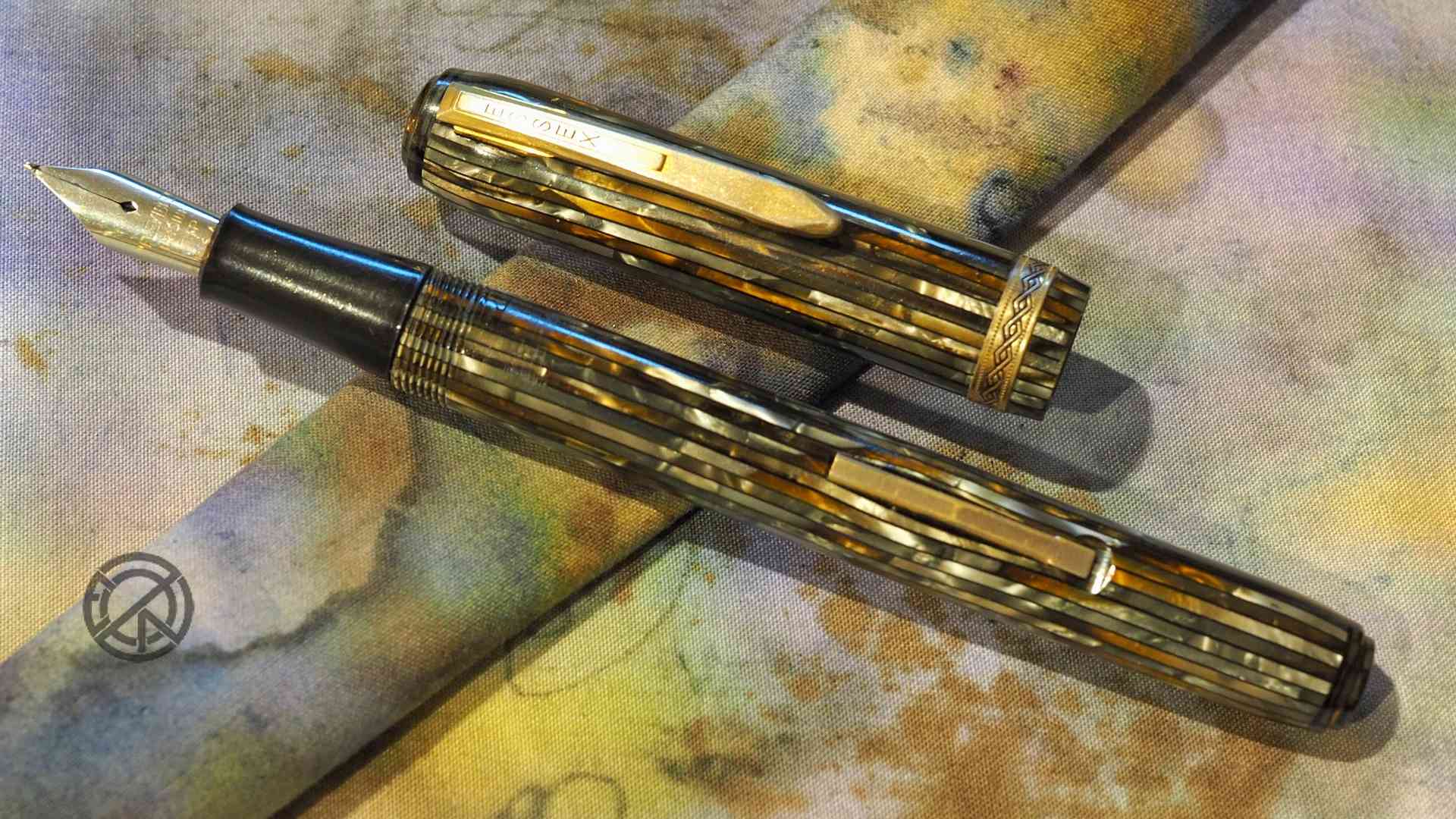
Hero in modern years was the only pen maker to still make a true Aerometric Fountain Pen. Their designs were based on the 50s and 60s Parkers. Since they had the same tooling, these pens reflected the old Parkers. Now they've gone that step further. Hero, under the brand Wing Sung has reintroduced the Aerometric Vacumatic Fountain Pen. Looking and writing with this pen can take you right back to the beginning of the Parker 51. Which it is effectively. In every aspect. The Wing Sung #601 is not a copy of a Parker 51, it looks and is the same dimensions, yes. But it's had the benefit of time and modern manufacture. This pen uses new parts, that mirror the original. But this pen can be completely stripped and cleaned by the owner! One of the worst things about an Aerometric pen is having to clean it effectively. If you have a set ink choice. It's not a problem. But the writer that likes to change inks, is hard done by with an Aerometric. That front section houses a lot of ink and if you don't open the pen up, hard to remove all that no matter how hard you work at it. Now Parkers were not meant to be serviced my their customers. Hence the HERO Aerometric came with those same issues. The advantage to a HERO pen was they were affordable enough to buy multiples for your ink choices. Problem solved.

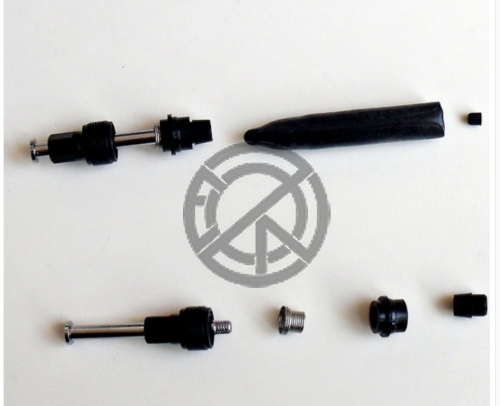
The Wing Sung #601, being a brand new redesign, has the ability to improve it and they did. The Aerometric parts are hand tight accessible. Cleaning is straightforward and so you can use whatever ink[s] you desire. This also means that nib swaps are very easy now. I hope we see in the very near future, gold, steel, widths. Dare I ask, flex nibs? And this hasn't been lost on the Vacumatic side either. It too has replacement accessible parts. The Parker pens require factory tooling to get at the mechanics. The Wing Sung, common tools. Durable metal parts. The instructions show a parts list. So I hope this pen's parts will be available. If so, this could be a very popular pen. HERO, mostly under the brand Wing Sung has introduced a lot of new pen ideas. Interestingly they have often done the Asian maker approach of cloning existing concepts. There are now a handful of Wing Sung models that take the Taiwanese maker TWSBI who has popularised internal pump acrylic clear demo fountain pens. Very serviceable. A lot of these new models mimic the original TWSBI. I like that they actually have improved on the concept as they cloned.
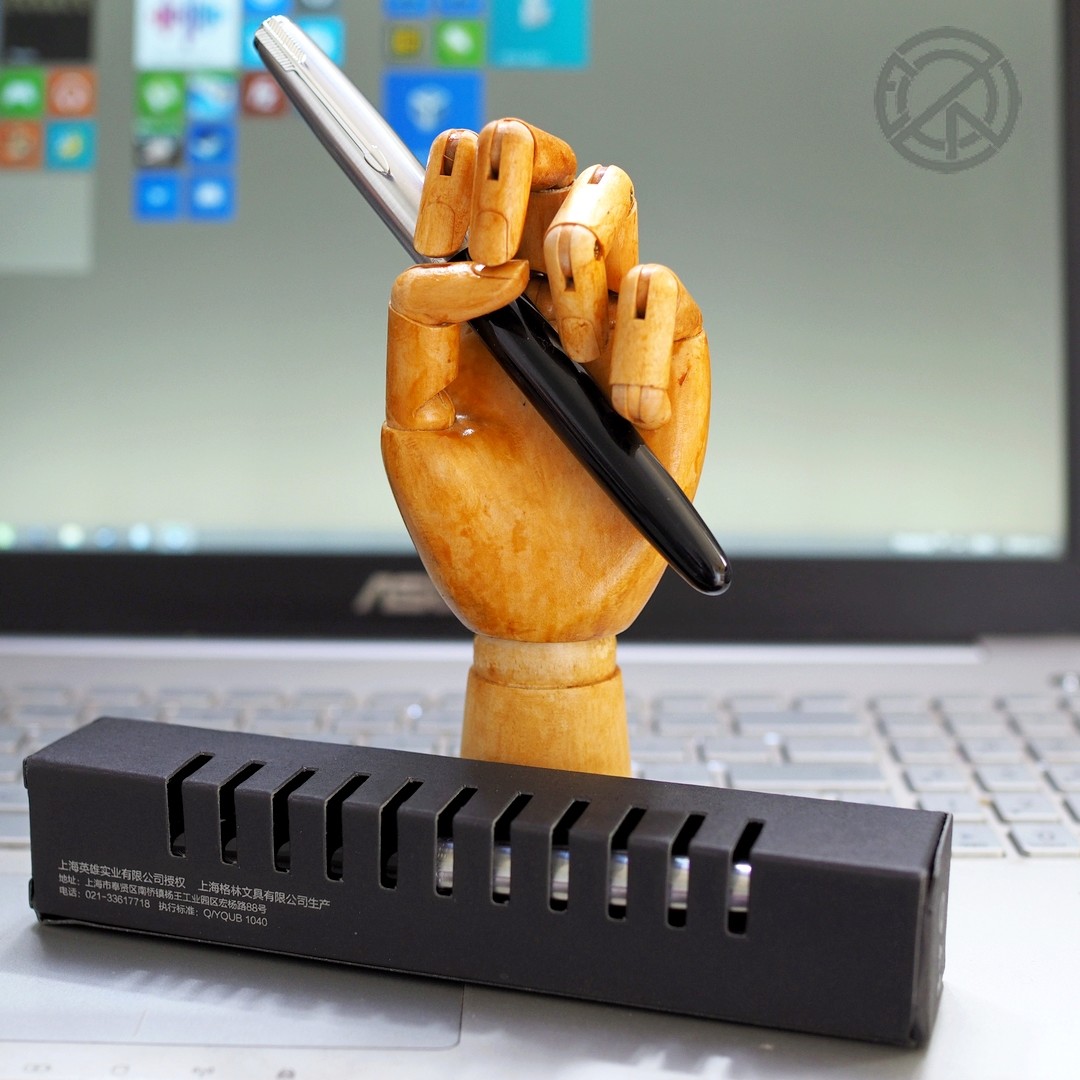


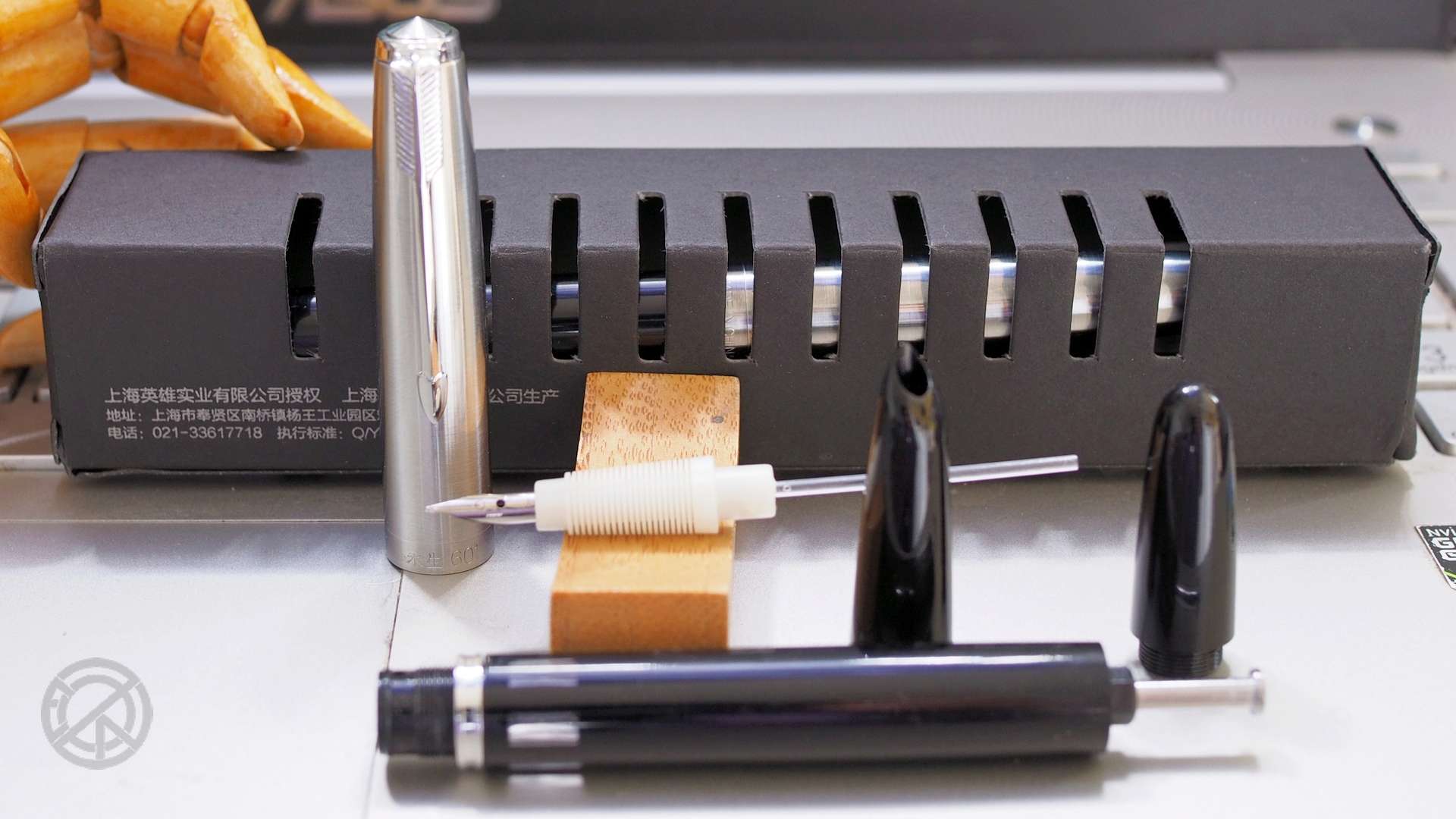


One aspect I find a problem with internal pump pens that have an exposed twist pump, is that you can fiddle this when writing or posting the pen. I have thus glurked, blurted ink from these designs when I didn't mean to. The different Wing Sung's I have used so far, all address that issue. Their twists, lock or hard click. Simple solve, but lacking in my original pen that they've cloned ... aka the TWSBI Eco

I have the Wing Sung #601 currently [while they are available] as an auction. Testing this pen, I am very pleased with it's writing feel and handling, so I love that it just doesn't impress mechanically. But it's great to see a modern Vacumatic option. I hope they keep going with this and come out with an old school #6 exposed nib style option. Jinhao's recent hit the #992 is another of these well planned designs. It's impressive feature is the cassette threaded Nib and feed. Something that opens up the idea that you again, can use one pen and change it's nibs at will. These aren't new ideas, but they are certainly good ideas. Modular design in fountain pens make them serviceable, repairable, dynamic and practical.
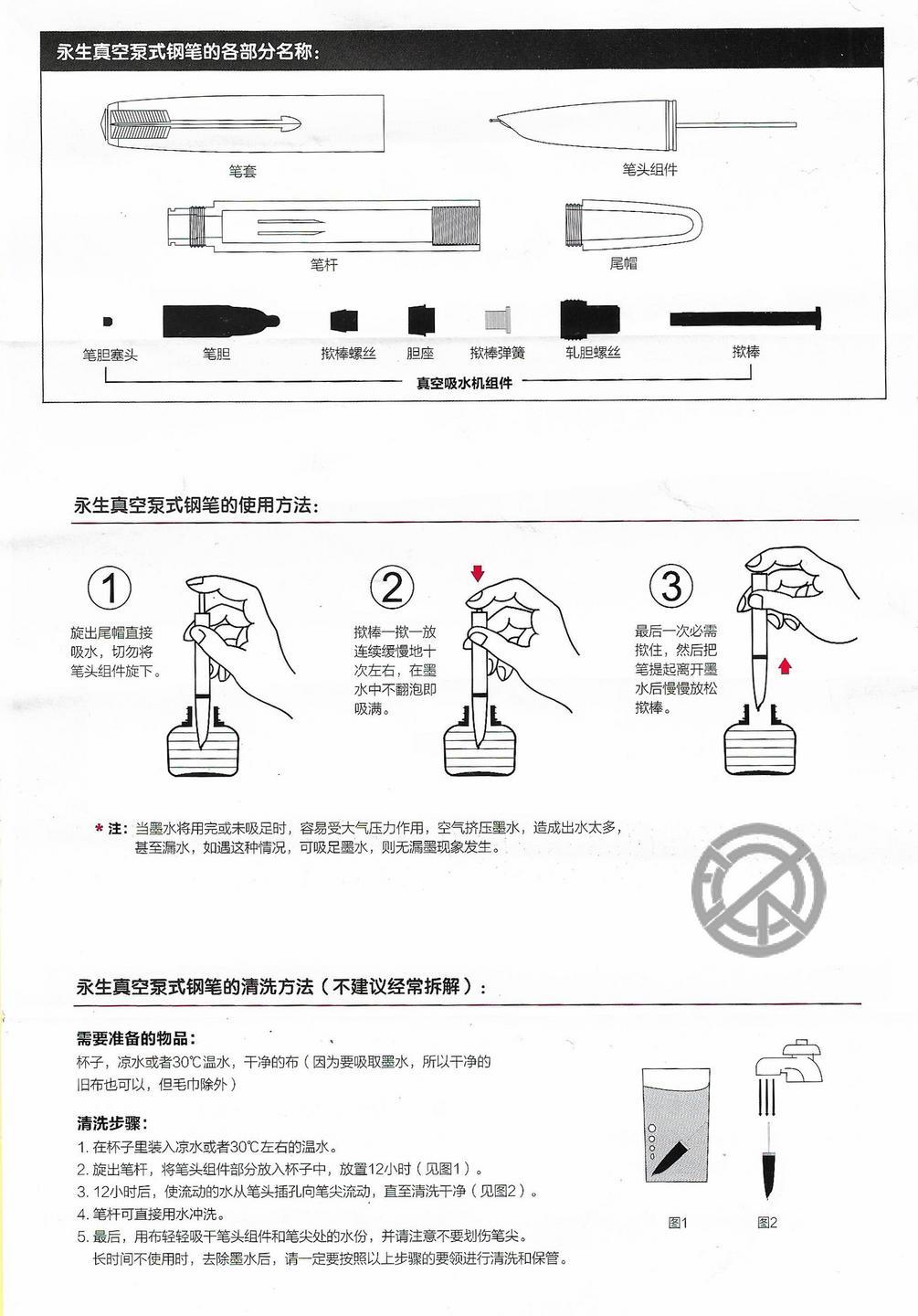
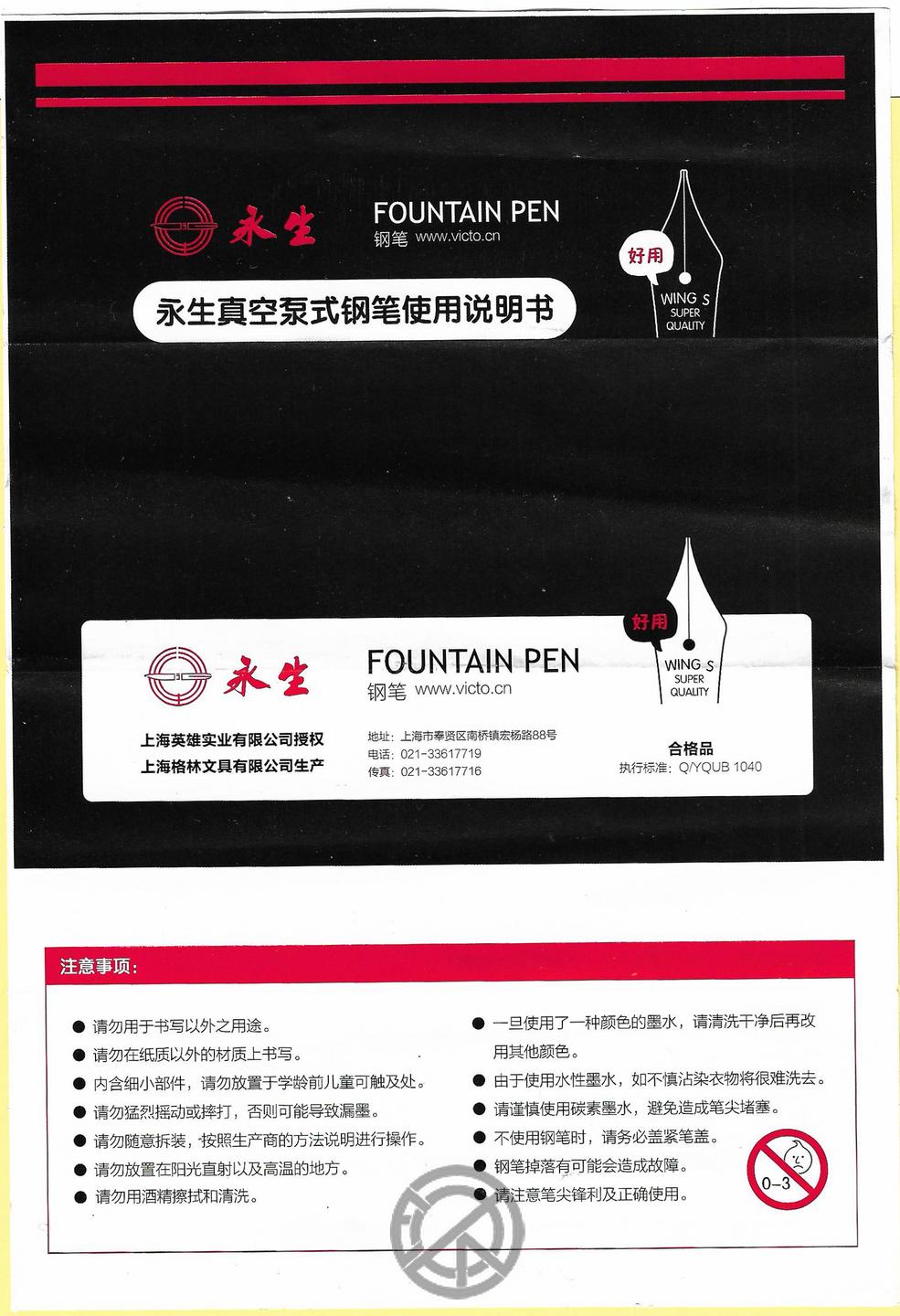
NB (3) Filling image. With an Aerometric style nib you pull the pen out of the ink before releasing on the last pump ... this helps clean any excess ink out of the covered section, no blob when you first use it!


.:: w a t e r s o l u b l e ::. pen news

PEN NEWS JAN-FEB 2018


Pen news while neglected by me has not stopped in the bigger picture. New ideas coming from China have been very interesting, surprising and welcome. The newest Fountain Pen that I have been stocking is the JINHAO #992 which is the most impressive "cheap" fountain pen I have seen in awhile. Based on new tooling the model comes with so many features for so little price? It uses the modern Acrylic plastic for construction. No doubt this helps keep costs low, but then you find brands asking $100+ using the same stuff, so it's not any kind of cop out. They've used a classic design, the Meisterstuck shape. Kept features in like a screw cap, the section to body doesn't just screw it's got seals and it's tight and fine threaded enough to use the pen as an Eyedropper fill. The section is also separate of the nib and feed. These are a threaded cassette so that there is the possibility that there will be aftermarket options of nib styles, the concept of even 14K nibs is now there. Maybe in more expensive models later on? Even without the cassette the handily sized #5 nib is keyhole slotted and comes out of the cassette with simple "tooth-wiggle" application. This is why I have been able to offer Fude de Mannen nibs as an accessory. They swap on the fly, with or, without ink in the pen. A Fude Nib and a large Eyedropper fill and you have a very serviceable artists' pen. Or you can use it as a great office tool. Versatile.

Not to be outdone, HERO PENS have been coming out with a lot of new models as well. They tend to be using the older Wing Sung badge on these. So maybe they are tapping the local Asia market? Wing Sung used to be it's own factory, but shut down in the noughties. Hero bought the rights and has introduced a growing list of new pens with this brand. A few months ago they came out with a handful of internal pump Fountain pens. These seemed to be based on the popular TWSBI pens. Not dead-on clones, but subtle improvements made these exciting. I had a couple of one-offs. Thought them too expensive, and I am reconsidering, as they now have much cheaper models as well. Even a TWSBI pen is a salute to older pen designs. Companies like Noodlers, TWSBI bring back old ideas that were left behind, generally because the cost of that design can't compete with the age of the cartridge pen. But nostalgic demand hasn't disappeared.

With HERO, I found they held onto old school designs in their own line. Hero produces most of the modern Aerometric designs. These came from PARKER's famous 51 Fountain Pen. Which in the early 40s models was probably one of the most complex and costly pens when it came to mechanical design. Now in 2018 Hero, under the badge of WING SUNG, has reintroduced a pen that I never expected to see except as vintage rebuilds and historic collectors pens. I am waiting on the first ones to see in hand, I can show some low rez images from stock photos. A Vacumatic Aerometric Wing Sung. Steel cap, Acryilic body, Aerometric nib closed section and collar. And a full-on diaphram, Vacumatic filler. The parts pieces look like Parker originals, at least 95% identical?


I am looking at this modern fountain pen and it's really a Vacumatic. Hero has done great Aerometric tributes, but always with more modern squeeze bulb spring lever fillers. This is a Vac pump, right down to the little bead that holds the bladder to the stem. They showed a clear demo in their early photos and you can see that the vac works exactly like the PARKERS of the 30s and 40s. It's the WWII era vac design, without any ban on using metal for the parts. As someone that deals with vintage Parkers, I am very curious to see how close these parts are?

Personally I am getting some more Parker pens from the past to restore. And so will be able to offer those when those projects come to completion. The Jinhao #992 are here now, I just got in solid Black body versions, the Wing Sung Vacumatics are on their way, I am guessing that these may just sell out really quickly? That is my own view, but this has to effect other collectors like myself?


.:: w a t e r s o l u b l e ::. pen news

PEN NEWS November 2017

Pens that aren't Fountain Pens

While sometimes thought as a lesser collectible, there are die hard fans of ball pens, roller and gel options. That is what I will limit myself to here, not touching the soft/fibre tip choices out there.

Once you find the ball or roller pen you like, it really does come down to the refills. They make up so much of the character of pens that can look and be in all kinds of configuration. I have limited my non fountain pens to the illustrious Ballpoint. In particular the Wide bodied Parker style refill of decades and it is so ubiquitous that many pens, from disposable to high end pens come with this refill as their choice of ink. Even niche inks like the Fisher Space pen refill comes with a plastic addition that turns it into a Parker/Papermate style, large barrel refill. And when you compare the thin stick click pen refills, there is none. They just don't offer a nice writing experience.

On of my trivia stories that I learned along the way in collecting pens from Asia was I always wondered why Fountain Pens were always cheaper than ballpoints of rollerballs? It didn't make a lot of sense as most Fountain Pens are innately more detailed and complex by their nature. While cartridge inks make swapping in new ink as easy. There is still a more complex system of parts in these pens. What I learned asking around and researching was that China, the same booming super power nation that has space exploration as one of their notches in achievements, does not have the technology to make micro ball bearings and so it goes they can't make ballpoint tips or rollerball tips and must import such products from Switzerland mostly. Germany is another option. It was odd to find that it was tooling that stopped them from making such frankly common items. But the pen ballpoint is a bridge too far. This is why Fountain Pens are cheaper. They can be 100% domestically made and so costs are reduced in the manufacture.

Finding out the why and how, I also discovered that Ballpoint and rollerball pen refills made in China, tend to have high QC and impressive performance. The refills I sell which go with the pens I have on offer. All work quite well, are very nicely priced and are dependable. One thing that I found in the generics, is they would do just as well against branded products made [apparently] in the same factories. The difference is generally: branding, packaging and a higher price point. One thing that the Generics didn't always have was choices ...

It seems that offering point widths wasn't always an option. Medium was perfectly good enough for the public. This has started to change slowly. Just as ink colour choices in these refills are starting to grow as well? But I have found three nib point sizes available. They don't always come up in the order and many of the vendor call: 0.5mm, 0.7mm and 1.0mm ballpoints, Medium. Where other branded makers will define these as Fine Medium and Broad! I am trying to get more choice and will try to offer very soon, those very size choices. Another new option is that in the past, my most popular refill the Parker/Papermate, the one that comes in all twist pens as well as many click function pens has traditionally been a classic Ballpoint ink. Well I will be getting some GEL filled inks in that refill as well. Can't say a lot more until I test them out in hand, but they will cost more. Since they are out of the conventional Medium Ballpoint mould.

None of this is stellar news, but the queries about this kind of option is one that I have been asked about enough times to respond.

.:: w a t e r s o l u b l e ::. pen news

PEN NEWS Late Quarter 2017


Hello New Zealand

My big achievement during the winter was to reinstate my trademe auction offers. And that was about it. Little did I know in moving, I would discover many new things to distract me and the weather warmed into the Spring, it got harder and harder to concentrate on routines, like posting pen news on the blog. I have been on mental holiday, there is no other excuse. Blame the fishing and yard's grape vine and the fruit trees and planting veggies for the table. I have been delinquent in the most distracting way ...

Now it's suddenly almost the holidays and with the slow boat express, otherwise known as international shipping and delivery, time is quickly going to run out! But I can say that I did get myself in gear and I have listened to loyal customers in what they are searching for and so for the pre-XMAS shopping I am going to be able to offer both new ideas and some good old favourites that I had thought to be priced out of reach. Just going up at the end of this report is the return of what I believe to be the BEST modern aerometric fountain pen at any price. Mainly because that price is so good for what you get. The HERO #565. This was a sleeper model, it's a slightly modernised homage to the Parker 51. Instead of sticking to the Parker Arrow clip and cap the #565 uses a more modern and frankly HERO styled chrome steel cap. A softer round bullet end, less apt to catch. Inside it's the classic Aerometric nib, feed and internal collar, that keeps the covered nib wet and ready to write. The design that Parker revolutionised and Hero keeps making, because it's a great fountain pen system. Now Hero makes more clone like models, The 616 and the new 616/2. The Demi #366 which are all nice pens, but quite low end. The #565 always was a tier higher, while avoiding the gold nib and features that come with the Hero 100C which is more expensive and closer to what the original Parker Pen tiers were constructed. Basically the #565 had all the features of a pricer pen, but still in the budget range. The nib while steel is very popular because of it's wider line. It is closer to a Medium than a Fine. Generally it's sold as a Fine, but looking at the nib you see it's wider and it has a bit of flex to the steel tines as well. It's modern in that the pen body is oversized in diameter to the older Parker copy models. It doesn't have as sharp a radius and is more of a torpedo shape at the ends. Along with the bullet ended cap, it's still a nice retro look and feel and is a great daily writer.

The kicker was that as more people discovered it, the retail price on it went right up and out of range ... it lost some of that perfect appeal in that it got over-priced. Not unrealistic, but it was harder to justify. I have found a source selling them at the older retail range and so can offer them again as an option. In the next few weeks heading towards NOV and DEC, I will be getting in some other pens that I thought were NLA or just got too pricey. There is a growing interest among clientele in the Asian Calligraphy nibbed pens, aka Fude de Mannen nibs. Now the models of pens I generally carry come with these, but after carrying them for awhile and finding little interest, I stopped looking for stock and in that time they have shot up in price. Where the pen is only different by the nib, and yet the price of the product is doubled quite often? I have looked via old contacts and I have found a decent supply of Fude de Mannen nibs. Made by Jinhao and the size that fit the very popular: X450, x750 and #159 models. Rather than guessing on orders of regular nibs to Fude options, I plan to get in a supply of the nibs and then I can offer with any regular model, the option of buying the 2nd nib. They you can swap in and out when you want, and not have to buy two pens, [unless of course you want to!] This will keep the price lower on these that are now seeing a new resurge of interest here. I can have the available without ordering the whole pens at an inflated cost as well.

.:: w a t e r s o l u b le ::. pen news

PEN NEWS June/July 2017


Hello Whanganui!

Well despite the move, the cold weather, the auctions have begun once again. I still am unpacking the odd pen models and I need to concentrate on the ballpoint stock to see what I have got exactly. Fountain pens and inks are up again for sale on trademe, nothing much has changed, except my address is new and I got the whole pickup and delivery sussed for the new locale. By looks of the first few auctions. I can still offer a prompt delivery which is good as that was a part of what I wanted to offer as a service.

And now more can appear here as I don't have the excuse of the moving any longer. Keep a watchful eye ...

.:: w a t e r s o l u b le ::. pen news

PEN NEWS April, May, June 2017


Not much for PEN NEWS these last months leading up to almost three now. For me it's been cardboard boxes and packing, as I am currently on the move. The relocation is taking up all my time currently and the latest aspect is I've ended my auction listings while enroute. This is to avoid delays and the fear I could make a mistake in orders in all the confustion. The last orders went out this weekend. Once I have settled in and done an proper inventory of the travelled pens and ink. I will resume as per normal. So I thank you all for your patience during this "intermission".

.:: w a t e r s o l u b le ::. pen news

PEN NEWS for March 2017


There is still time for Pen News in March, only just. I really did wait until the last minute to post any, which is too bad as I had the month's ideas early on and then just lost the plot to get them written down and uploaded ... one of the pen concepts that came to me, and it was back in my Uni days when I started thinking harder about being some kind of an artist. That discovery of the time was the stylographic pen. Which in the day I called a Rapidograph as I tagged the type of pen with the brand-name[?] Although I am still not clear on that, because more than one brand of maker will sell a Rapidograph labelled pen? But I did later learn that the original and I would suspect, proper name is a Stylographic Pen.

Which defines it as what kind of pen it is, as in the case of Fountain Pen. Stylos go back as far, maybe even further to some of the first automatic ink pens. When you look at the constructs of the earlier designs. They are pretty much the same as a Fountain Pen when it comes to how hey hold and draw their ink. As many of the Stylo brands came out of Europe/Germany/France. We see a lot of internal twist pump systems. Much like the era's Fountain Pens. It's when you get to the delivery end that these pens get quite different to a nib for their mechanics.

That is because the Stylographic pen then becomes more akin to a ballpoint pen, which was a later invention. The stylo's point is a hollow barrel/tube. Some of the get quite small in their diameter. To the point you may even think hypodermic? The Stylographic's "nib" is very much in mechanics a hypodermic needle that has been rounded and smooth. We the additional attention of a solid rod/pin floating inside that tube. This addition creates several aspects to the tube. It restricts the flow of ink through the tube, as it takes up much of the inner hollow. But that isn't the only aspect. Behind this thin solid rod is a weight. Welded to it at the back. The weight is a larger diameter and acts then like a plug to stop gravity from simply draining all the ink out of the pen when held down to write. The thin rod is slightly longer than the hollow tube and protrudes out the end of it. When the tube's point meets the paper, the rod and weight are pushed up into the pen, which opens the flow and capillary action is what then pulls more ink as the pen writes along the surface. When you pick it up that flow it stopped by the weight dropping back down again. This was the mechanics that presided a ballpoint design. But fulfills many of the same mechanics.

Stylographic pens are very precise line creators. Depending on the size of the tube, relates to how wide the line is. With the larger diameters, the inside hollow remains smaller. The ink then flows out from a centre hollow and the end of the tube acts more like a Fountain Pen, Wide nib acts. Where the thin flow of ink is spread over the width. You tend to hold a Stylograph differently. Perpendicular to the paper surface. Not the angles you see with fountain pens. Stylos ended up mostly as the tools of the mechanical drawing artist. The advantage of exact lines that did not vary. Even today as these pens have become less common than Fountain Pens, the place you still see them used, even in the digital age, are Line Printers. Here you can plug in these liquid ink pens and let the robots do all the work. Inkjets can thank the Stylographic pen for their existence. As the Pen Printer was the dinosaur forerunner of the inkjet's miniaturisation approach to a mechanical forerunner.

I Learned about Stylographic pens hanging out with other artists at Uni and it wasn't my first pen, that one goes to finding my Dad's Vacumatic abandoned in an attic junk box. When I did discover the stylograph as a pen concept. I wanted one. Micro fibre pens were not yet perfected, and ballpoints were crude. Fountain pens were hard to control in mechanical drawing applications. And the thin character aspects of fine line Rapidograph, was truly a step past amateur tools. I really wanted one and secured a 2nd hand Lever fill 0.4mm tipped stamp braned as a RAPIDOGRAPH.

Later I found you could buy cheaper, newer designed stylos that were much more modular and came often in sets of size choices. But in those days I didn't really understand the properties of inks and completely killed my Rapidograph with pigmented ink. Slugging it up and seizing it's function. Trying to clean it and actually creating more harm in that process. Had I known I could buy new ends as replacements, (These are sold much like steel art nibs, because they wear out in use. The solid rod can wear down to where it doesn't protrude and the system stops working.) Also if you put them apart, the core rod is so delicate, that you can kink or bend it and then it will also never work right after that, due to the friction you add to the mechanics. The bad ink also dried and ruined that pens bladder. My early fascination with such pens, was tempered by the aspect you had to highly maintain them. Fine pointed fibre throwaways came along and started the vintage stylographic on their decline.

Not forgotten, you can still find and use them. I have a few on auction, because they brought back memories and I don't know that they will sell well. These days, such a pen is quite a niche desire.

.:: w a t e r s o l u b le ::. pen news

PEN NEWS for February 2017


The theme for FEB is stripes. I have been working on pens with stripes, not the vertical Vacumatic ones, but the lateral kind. It's a kind of rough status thing, vertical stripes represent the Vacumatic line. Not exclusively as there are other patterns. But Parker kept that design exclusive to that one model. Some of the pens I have been restoring are striped Duofolds. These are quickly spotted by the striped celluloid transparent and coloured layers going the length of the pen. I also have a more traditional black body duofold, but held up to the light you can see it's more a dark brown when you contrast the transparency stripes in the body.

This first example are some photos as the pen is being restored. It's a Blue Diamond Duofold in green pearl celluloid. Sometimes called a Duovac, as the filler system is a speedline Vacumatic filler. This dates the pen age to 1940-1941, based on the various clues in the details This Duofold size was called an Ingenue. (Smaller like a Debutante.) The blind cap has a Tassie style jewel, the speedline filler system, being a Blue Diamond model and it has the PARKER V style nib. This nib has an engraved V under the breather and the lower part of that nib was contrast silvered. This pen's nib only has a trace of that at it's bottom length. The photos show some modern owner damage on this pen. They went and filled the stamping and used a solvent based paint, which as you can see, marked the body barrel. It's not uncommon to find these old pens survive the ages only to get damage when people mess around with them. That kind of mark can be polished off, but it would have been better to not have gone and done it! (I polish these old soft plastics with a nice bit of leather. Nothing more abrasive than that.


I first noticed the paint on the body when I photographed the pen. The camera brought it out because the paint was a silver reflective type and in real life, it didn't show up as much to the eye. It did all polish away ...


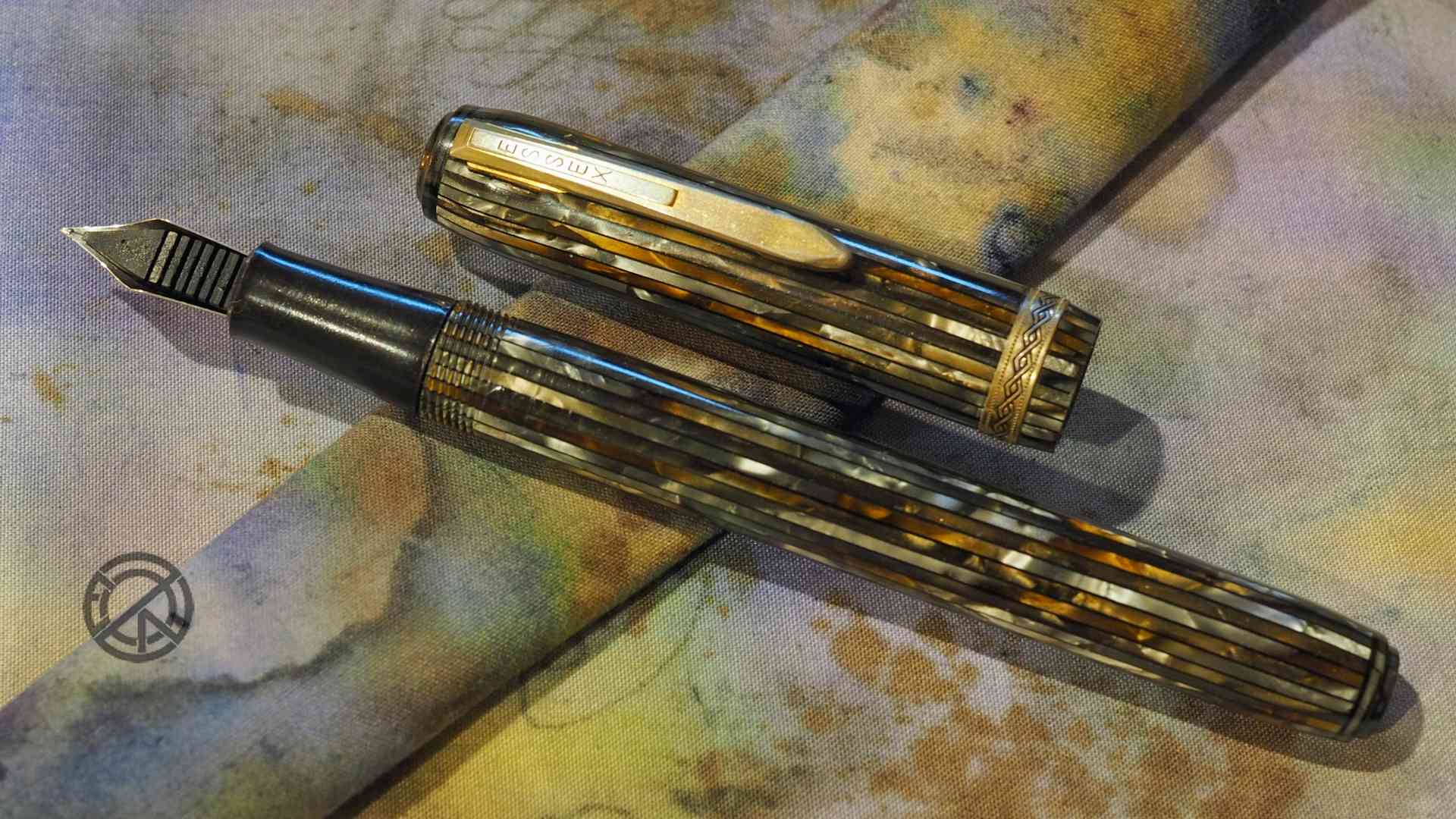
This pen is a 2nd tier brand made during the second world war era as well. The brand is ESSEX which was a sub-brand of the American Lead Pencil Company, who went on to become Venus. They started to make fountain pens during the war years and created this pen in a variety of unique brand names. ESSEX is probably the most uncommon, PRESIDENT, I could at least find more information ... these pens suffered a particular construction method where the section was permanently glued to the body. No amount of heat would release the section from the pen. This was my first pen to restore and became the most problematic! Because there was no safe way to remove the section to repair the pen. In the end, I had to find a replacement section. The pen itself has a very nice parti colour design. No transparency. Level filled and a steel nib that is flexible in design and imprinted as such. It was gilded at one point, but with only the faintest layer. A very nice pen that would have sold under a dollar in it's time. This pen is now in almost mint condition with a new silicon sac and a new section.


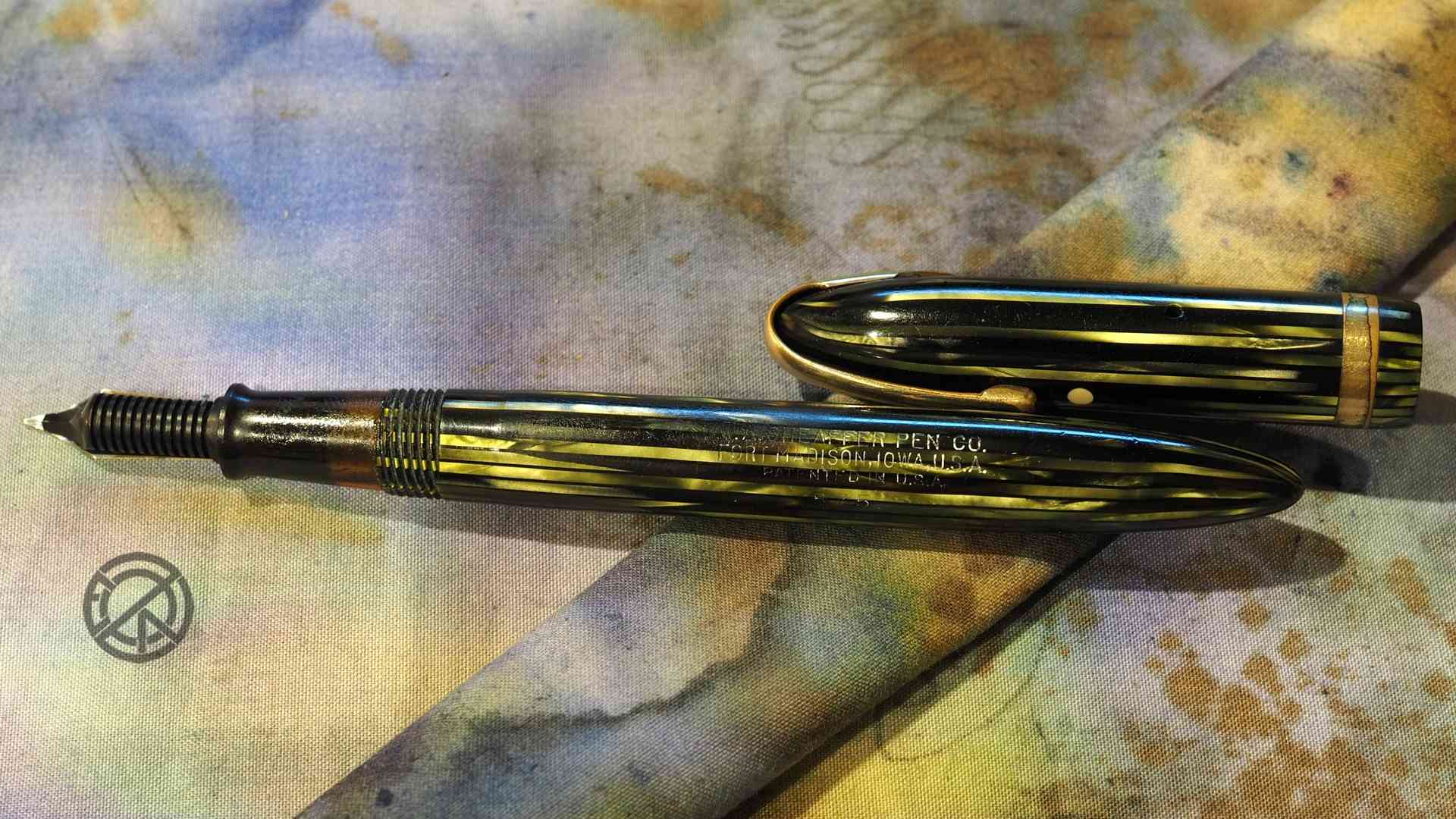
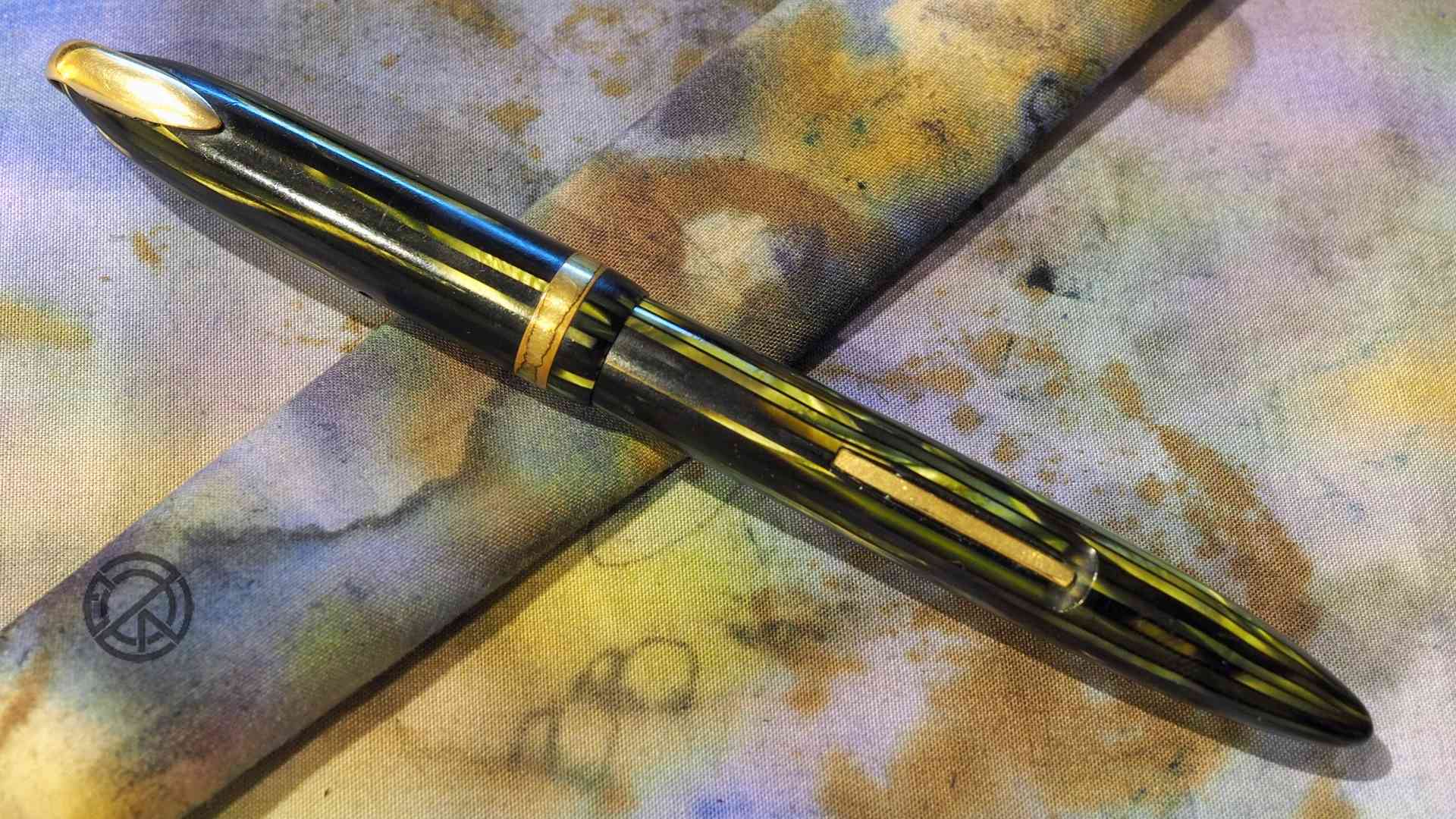
The third striper here is a Sheaffer's Lifetime White Dot. A lever filled Sheaffer, cucumber/watermelon striped green celluloid, this pen has the very distinct Military Clip style which was designed to fit into pockets that had a top closing flap. So the pen rode all the way down into the pocket. This pen has an ink window transparency to the section and the Vigilant model LIFETIME nib that is two toned and bedecked in a descriptive imprint. It also sports the Lifetime White Dot on the cap below the clip on this model. This particular pen had a mummified and solid ink filled sac that has now been replace with a new clear silicon one. It's an attractive and unique design. This was a war era pen, the Military clip was called, "Over-The-Top" and it was marketed toward use my those in uniform.


Watch for these and more vintage pens to go up for sale. As they are completed.

Parker WWII era Vacumatic Fountain Pens


Here is an ever-growing thread. This has evolved into a nice collection of Vacumatics, of various models & years centred around the WWII time of manufacture. I am adding some of my DuoVac examples as well. They all use the same Vacumatic system of filling the pen's body with a diaphragm bladder pump.

Parker Vacumatic Major c1946 Gold Pearl, 14K Fine Flex nib

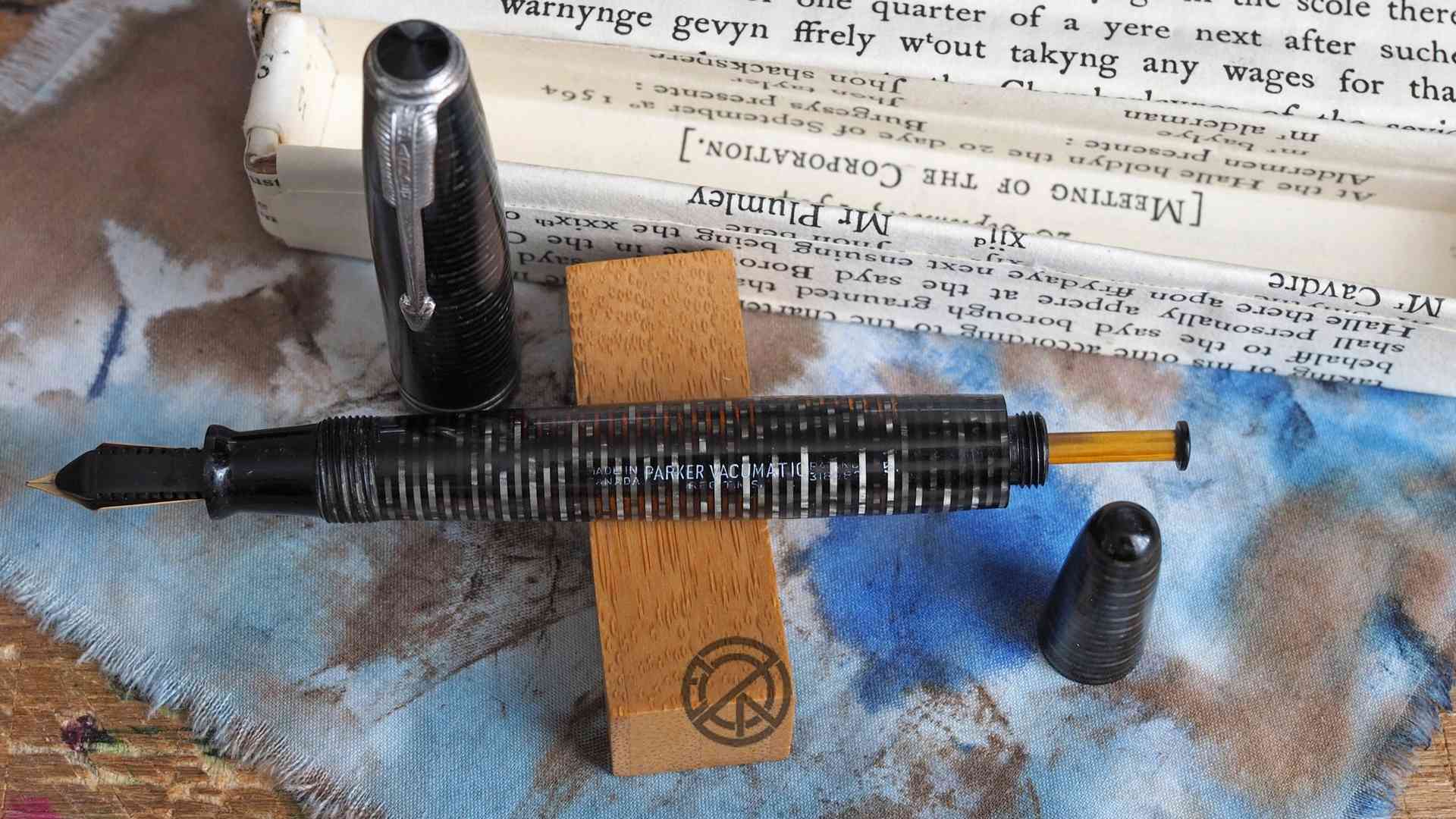
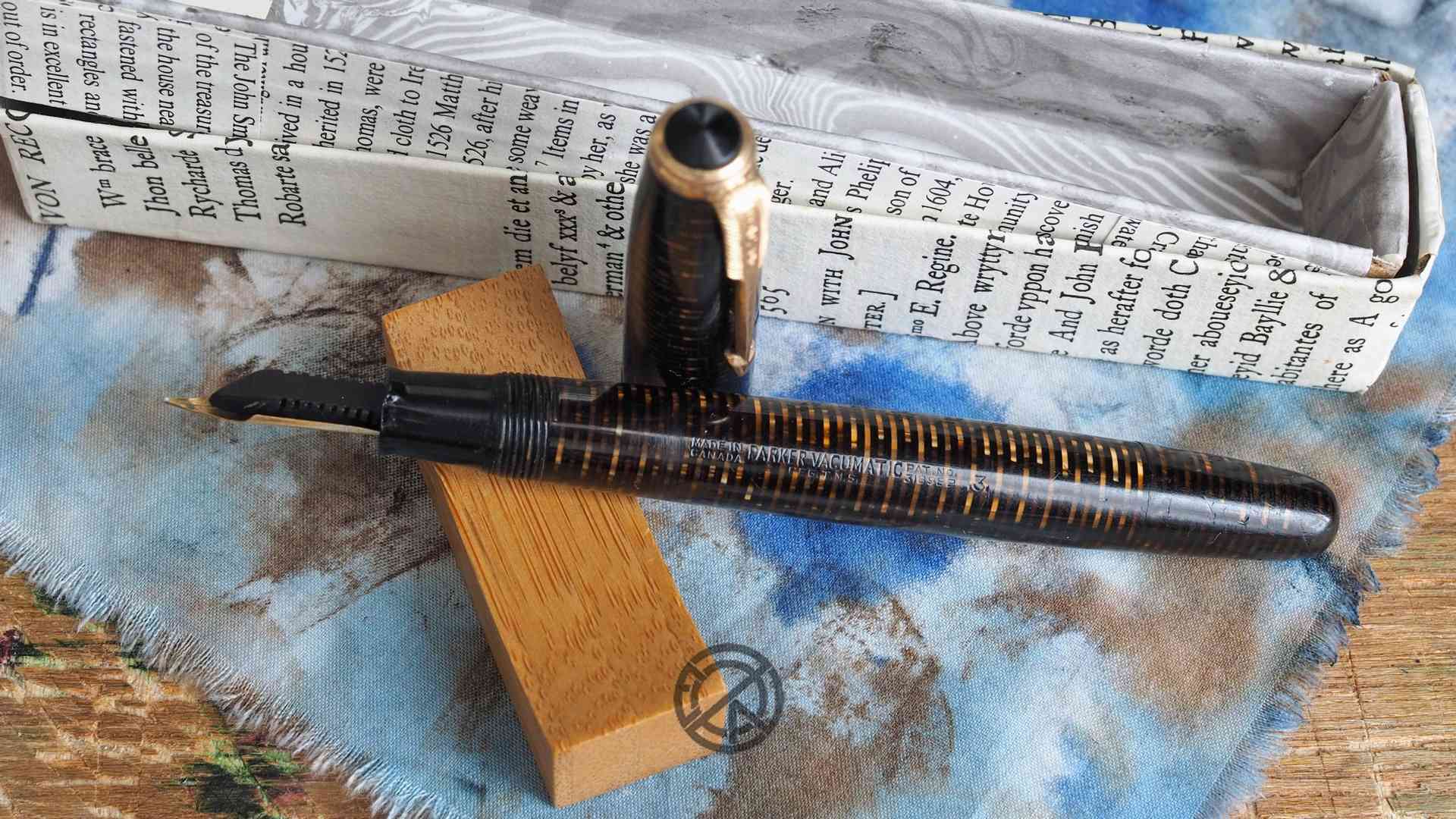
This is a fully restored Vintage Parker Major [USA] Gold Pearl Striped Celluloid Vacumatic Fountain Pen, while this is a vintage pen, it's been repaired and restored to full working order. Cleaned and polished and ready to write. The Vacumatic measures 123mm capped. 115mm uncapped and 143mm posted. 13.65mm diameter. The pen has a banded amber translucency to the celluloid barrel which acts as an ink window. Vacumatics use the body of the pen as it's tank and the pump and rubber diaphragm at the back is what creates the vacuum to fill the pen. This link goes to a short video clip which backlights the pen to show it's transparency. Not always visible in photos. https://vimeo.com/denniswilliamgaylor/vacumatic-transparency

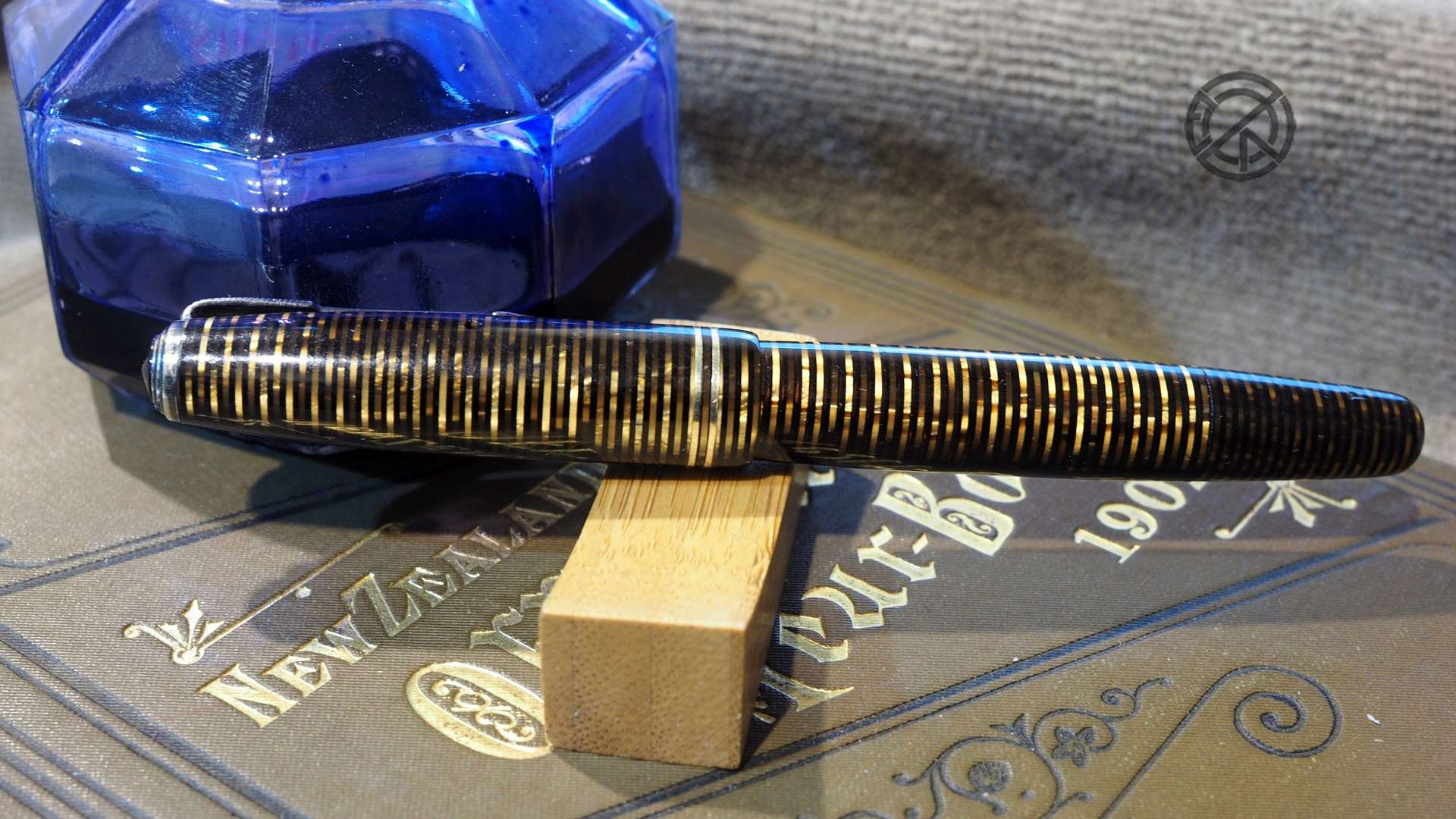
This is a beautiful example of what are quite attractive pens. The stacked horizontal lines of the celluloid body and cap, with the corresponding opaque colour bar, then a darker translucent band. That is done in a random depth variegated effect laterally ... this gives a very organic design. It's a style that identified the Vacumatic models. There is one black jewel at the cap's finial. The clip and cap band are gold plate and in excellent un-brassed, condition. There are twin gold band's at the cap's waist. The 14k gold arrow nib is a Fine point and has a fair bit of flex to it giving you a variable line width. The Blind cap reveals the pump stem at the back. Be sure to click on the photo thumbnails to ensure a detailed view. The body is imprinted on the side and clearly visible.


Vintage Parker Major Vacumatic c1943
Silver Pearl Blue Diamond Fountain Pen 14K F firm flex nib


One of the rarer colour range, as it incorporates the Nickel Chrome accents vs the more common 14K gold plate on the other models; the Silver Pearl. This pen is a Blue Diamond version (Blue Diamond pens came with a Lifetime Guarantee, up until 1947 when the US government banned guarantees which included additional fees.) Just showing it's date mark on the body's stamping & WWII austerity celluloid pump parts date this at 1943. The 14K flex nib is a Fine tip and has a firm flex to it. The Feed below the comb is stamped V.

This pen has been cleaned & mechanically restored to full working condition. There is a brand new Diaphragm sac installed as part of that. It has been vacuum tested, water tested & the nib has been dip tested to show the writing sample. This pen has good body transparency in a patina'd amber tone. The body, cap & blind cap are all in good shape. There is wear, but no overt markings. The Nickel Chrome clip is in good condition, the cap's waist band is showing tarnish. The blue diamond has been refilled to make it prominent again.

    Nib: 14K Gold Fine Flex firm
    Nib Markings: Gold Arrow Logo PARKER U.S.A.
    Barrel Color: Silver Pearl w transparent layers, Celluloid laminated.
    Barrel Markings: Geo S Parker PARKER VACUMATIC Made in USA 3
    Cap Color: Silver Pearl Nickel Chrome Blue Diamond Arrow Clip Deco waist band
     
    125mm capped
    115mm uncapped
    143mm posted
    13.7mm diameter
    16.1gm


PARKER c1943 Vacumatic Sr. Debutante - Black Lateral Stripes - Fine-Flex-Medium Nib

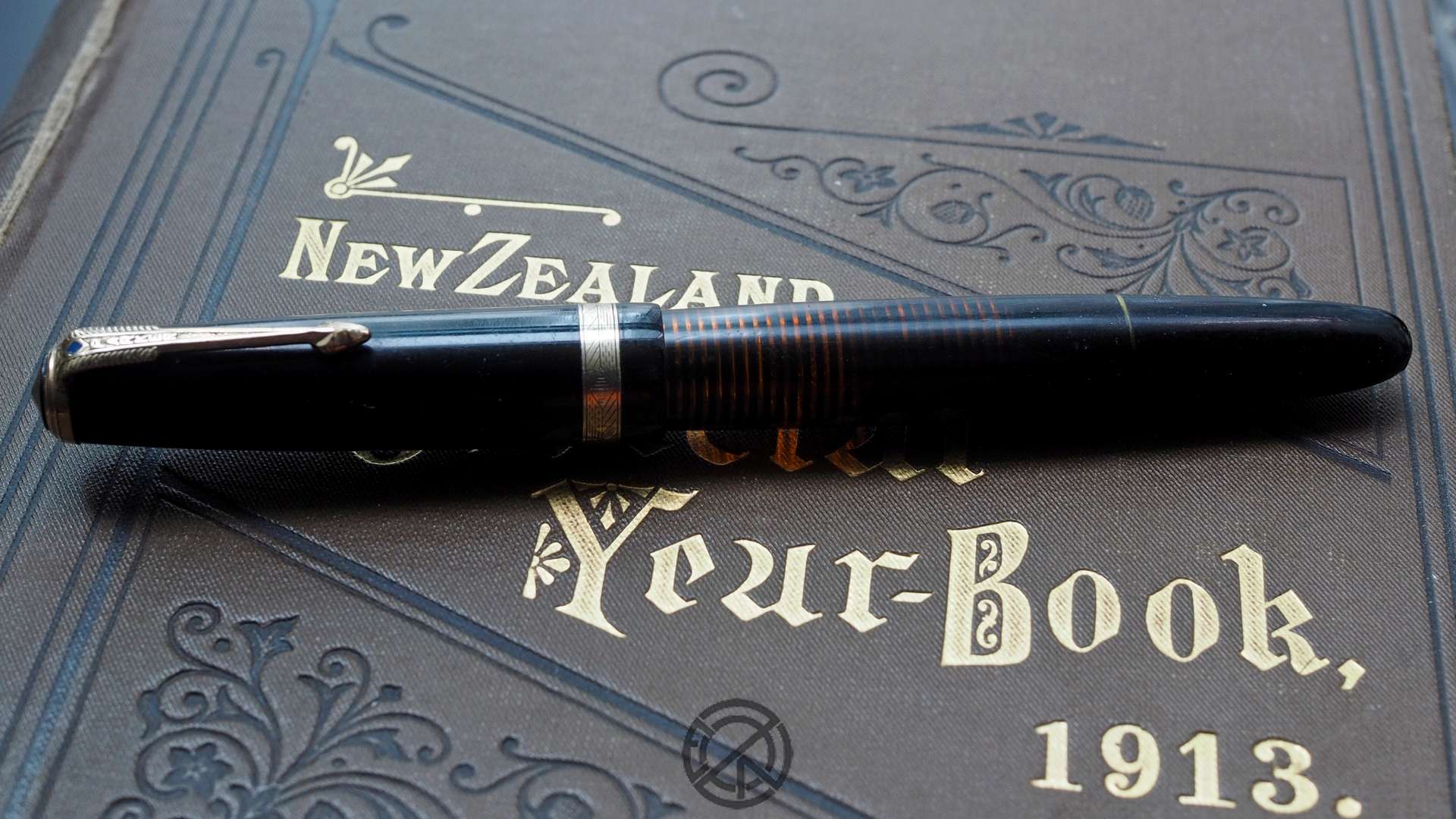
Here is a Sr. Debutante Vacumatic (Blue Diamond) Made in USA 2nd Quarter of 1943. Celluloid Black and alternating translucent Lateral stripes along the body giving a clear look at ink content. This pen has been stripped down, cleaned and tested. Fully working in all respects.

Imprint is well worn: Geo S Parker PARKER VACUMATIC Made in USA .3. Nib is a 2-Tone Arrow point 14K gold Fine with Medium flex Nib. Most of the silvering on the nib is gone, the gold underneath is showing through. These two toned nibs are more rare than the plain gold. There is a slight Oblique slant to the nib for the right-handed. The Fine nib flexes to Medium

The Body and cap's condition show this pen was used in the last 73 years, but not abused. This pen's interior is clean and clear and shows good transparency. Cap has a Black Jewel and a Blue Diamond PARKER signed Arrow Clip. with a gold Deco banded waist. The Vacumatic plunger is a WWII austerity Celluloid design. Compact size would make for a great little travel or pocket pen.

    120mm capped
    111mm uncapped
    134mm cap posted
    12.25mm diameter
    11.1 gms


PARKER c1945 3rd Qtr. Vacumatic Maxima Slender Silver Pearl - Nickel Plated accents - Medium Soft Flex Nib Canadian

A longer Silver Pearl w/the rarer silver furniture. Canadian WWII era Slender Maxima in Nickel Plated accents. Overall excellent cond. Nib signed: 14K PARKER VACUMATIC REG. T.M. MADE IN CANADA 5 It's a medium soft flex nib, check out the ink dip test in the photos. The body stamp is crisp as well: MADE IN CANADA PARKER VACUMATIC REG. T.M. PAT. No. 318982 5. [3 Qtr. 1945]

Clear transparency celluloid has amber patina, photos indicate overall pens condition.

    136mm capped
    125mm uncapped
    156 mm posted
    14mm diameter
    16.8 gms

Vacumatic Diaphragm filling w/WWII austerity Celluloid plunger.


PARKER c1943 2nd Quarter Vacumatic Major Gold Pearl 14Kt Gold Medium Soft Flex Nib Canadian

A Canadian WWII era Major. excellent cond., the pen was quite dirty & cleaned up to reveal a very nice pen. Nib signed: 14K PARKER VACUMATIC REG. T.M. MADE IN CANADA 4 It's a medium soft flex nib, a lot of line variation, check out the ink dip test in the photos. The body stamp is crisp as well: MADE IN CANADA PARKER VACUMATIC REG. T.M. PAT. No. 318982 .3. [2 Qtr. 1943]

This pen is completely restored, cleaned & repaired. Someone in the past tried to muscle the section off and they left dents. (hate to see damage made by ignorance) Once restoring these Vacs, I have gone to not sealing the section with the traditional Shellac, bonding the section to the body. Instead I use waterproof silicone grease. This seals and yet lets you remove the section which facilitates keeping the pen clean and pristine. Nice body transparency celluloid has reddish patina. The pen has been flushed of old ink, diaphragm replaced. The interior, the nib & section cleaned and the whole pen polished and tested for functionality.

    130mm capped
    120mm uncapped
    154mm posted
    14mm diameter
    16.1 gms


PARKER c1945 Vacumatic Major Black NIB MINT 14Kt Gold Medium/medium Flex Nib

This may be my best find for a Vac. New in box, original box, original wrapper/envelope. The condition of the pen is unused. For it to survive all time without wear. The rubber sac had gone brittle, which is to be expected. It was never used over 7 decades.